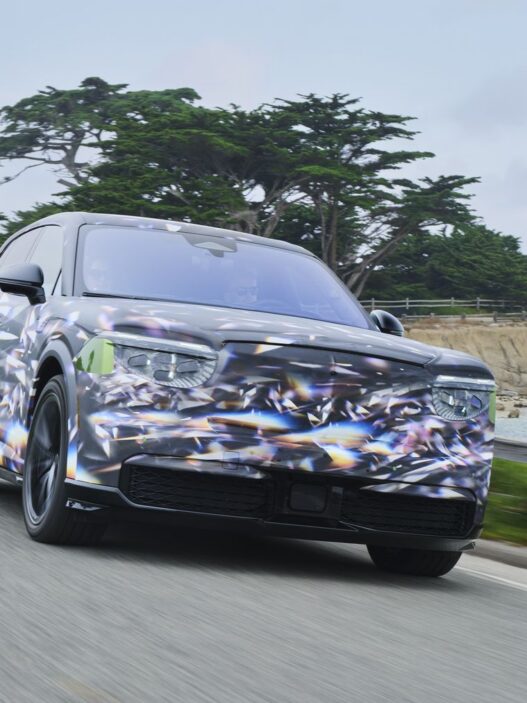







The KGM Torres Hybrid cuts a rugged figure, but behind its bold lines it is more family SUV than hardcore off-roader. This Korean newcomer scores with space, comfort and sharp pricing, though it shows weaknesses in infotainment and interior materials.
A Name That Promises Adventure
The name Torres conjures up images of the wild Torres del Paine mountains in Chile, a setting of dramatic peaks and endless horizons. For an SUV, the branding is perfect. Yet the Torres Hybrid with its front-wheel drive is not a mountain conqueror. In daily life it lines up next to family wagons and company Golfs, even if its looks whisper “basecamp” more than “hardware store run.” The real question is: how much adventure does this new full hybrid actually deliver?

Under the Hood: Hybrid Power, With Limits
Lift the bonnet and you find a 1.5-liter turbo petrol engine with 110 kW or 150 PS, paired with an electric motor rated at 130 kW or 177 PS. Sounds impressive, but the system output is capped at 150 kW or 204 PS with 300 Nm of torque. That is enough to get moving quickly on country roads, but top speed is limited to 180 km/h. The hybrid’s DHT transmission switches automatically between series, parallel and blended drive modes. The Torres can even drive purely electric up to 100 km/h, powered by a small 1.83 kWh battery.
Keep things relaxed and the electric side does most of the work. Overtaking is handled without drama. Push harder and the four-cylinder sounds strained while response remains modest. It matches the SUV’s comfort-focused character more than any sporty ambitions. At 4.70 meters long it feels substantial, and while it is no climber, it is a steady guide that brings you home. The suspension is tuned to smooth out bumps more gracefully than its sibling, the Musso EV. On test, average consumption was 7.8 liters per 100 kilometers, above the official figure of 6.1.

Inside: Roomy but Rough Around the Edges
Step inside and hard plastics on the doors and lower cabin panels are easy to spot. Fit and finish are fine, and some surfaces are textured, but premium it is not. The base price of 39,390 euros does bring solid equipment: heated seats, DAB+ radio, automatic climate control and keyless entry. Our test car in Lux trim at 45,890 euros added 20-inch wheels, an electric tailgate and genuine leather upholstery. Some might call it old school, with physical buttons on the steering wheel that work better than the clunky controls of the Musso EV. Beyond that, real buttons are scarce.
Two 12.3-inch screens dominate the cockpit. The layout is modern and menus become familiar quickly, but response times could be sharper and the navigation graphics feel dated. Apple CarPlay and Android Auto are supported, though only via cable. For many, that is hardly a dealbreaker, and in fact wired connections avoid the battery-heating quirks of wireless charging.

Space as the Big Advantage
The Torres’ greatest strength is its space. At 4.71 meters long with a 2.68 meter wheelbase, it offers generous room front and rear. Even at 1.85 meters tall you will not feel cramped. Better still, luggage space is vast: 703 to 1,662 liters plus a hidden compartment under the floor. That means it easily swallows camping gear or family holiday loads.
Compared with rivals, the pricing is sharp. It undercuts the Toyota RAV4 Hybrid and sits level with the Hyundai Tucson Hybrid, while offering a rich equipment list. For families or frequent drivers, that is a strong draw.
Verdict: A Practical, No-Nonsense SUV
The Torres Hybrid is not for those chasing Nürburgring lap times. It is built for families, commuters and practical-minded buyers who want space, comfort and decent efficiency at a fair price. Strengths include interior room, relaxed ride and value for money. Less convincing are the interior materials, the front-wheel-drive traction and the modest driving dynamics. Call it a dependable mountain guide rather than a summit sprinter.