




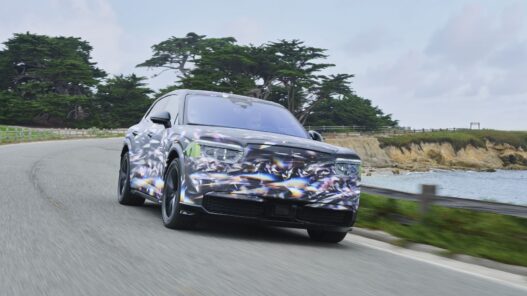
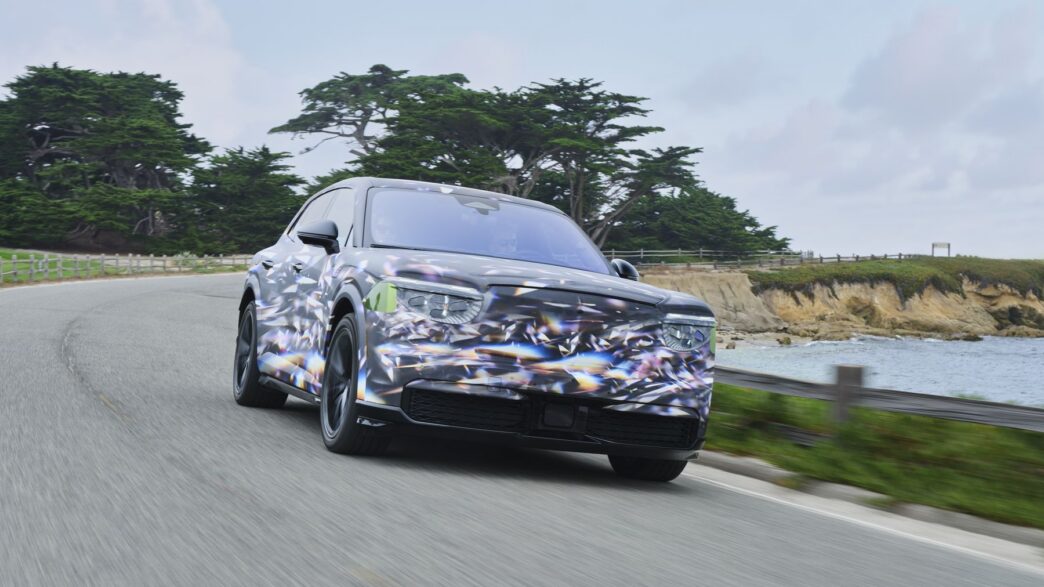
Every guide needs solid ground to stand on before adding their own character to the route. Bentley’s first electric car borrows its ground from Porsche and then tries to make the journey unmistakably its own.
A Shared Platform, A Different Ambition
The Torcal is Bentley’s first fully electric model, and underneath its skin it shares a great deal with the Porsche Cayenne Electric: both ride on the Premium Platform Electric (PPE) and use the same 113 kWh battery with 192 pouch cells. Bentley quotes a range beyond 600 kilometres, measured with the car fully equipped so the figure stays realistic.
Charging tops out at 400 kW, enough to take the battery from 10 to 80 percent in under 20 minutes. None of this is small: at roughly 2.7 tonnes, the Torcal produces 653 kW or 888 PS and 1,350 Nm of torque, enough for a sub-three-second sprint to 100 km/h in launch mode. Bentley’s chief executive, Frank-Steffen Walliser, is characteristically understated about it: „A car doesn’t automatically get better with 1,000 PS.“
The Chassis: Porsche Cayenne Underneath, Bentley Torcal on Top
Air springs and twin-valve dampers, independently adjustable for rebound and compression, form the technical backbone, which is essentially Porsche’s Active Ride system. Bentley calls the process of adapting it „Bentleyfication,“ and chief engineer Martin Page insists „every system is tuned for Bentley.“
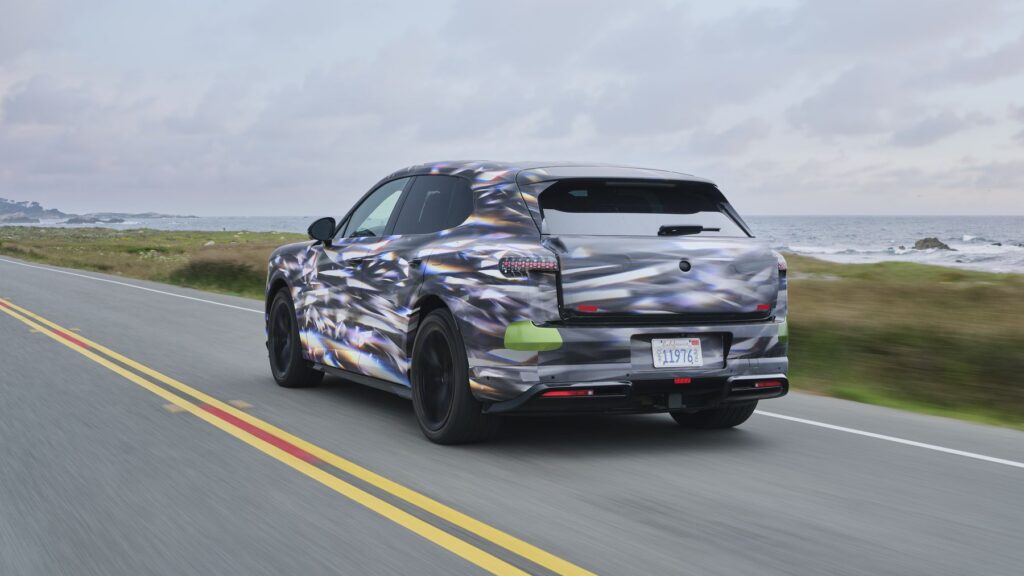
In practice, that means the Torcal gets only the top-specification version of the Cayenne Electric’s chassis, and dispenses with conventional anti-roll bars entirely: active dampers, each linked to its own motor-pump unit per axle, take over that job instead. British engineers widened the oil transfer channel between the two damper chambers by 1.38 millimetres compared with the Porsche version, to spread the character further apart between driving modes.
Five Modes, and a Chassis That Breathes
Drivers choose between Comfort, Bentley, Sport, Refresh, and two off-road settings, Dirt & Trail and Snow & Grass. Refresh mode is designed to counter fatigue, partly by blowing cooler air into the cabin. Ride height shifts with mode and speed: in Bentley mode, the reference setting, the body sits at its standard level below 70 km/h, drops 15mm above that, and 30mm beyond 115 km/h.
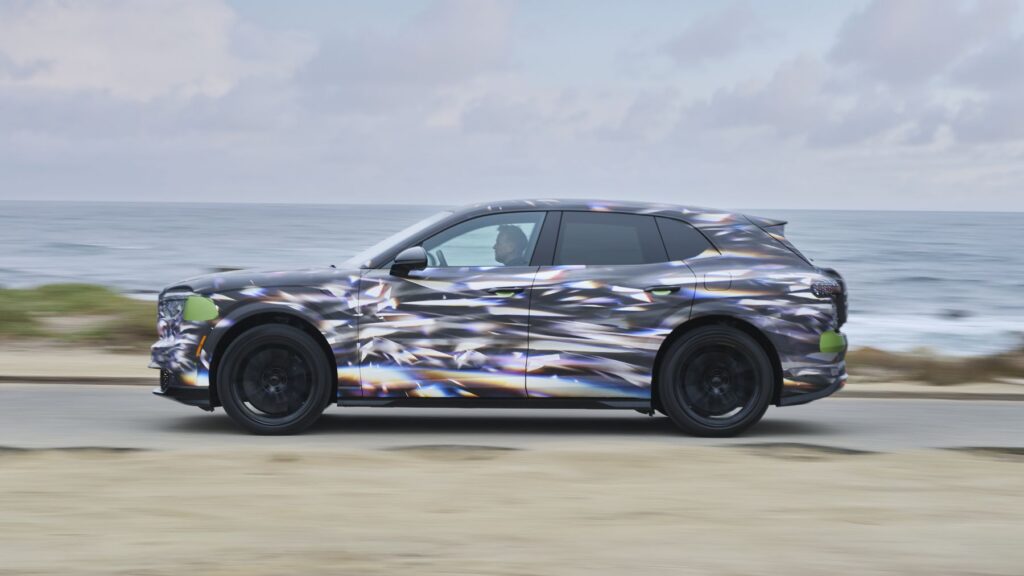
Sport mode sits 15mm lower from the start and drops a further 15mm at higher speeds. Comfort mode holds its standard height until 135 km/h before stepping down in stages. Off-road, the body can rise by up to 55mm, and engineers are visibly proud that this brings the Torcal close to the Bentayga’s off-road ability, helped by a chassis that stiffens in the off-road modes.
First Impressions: Composed, Not Yet Fully Tuned
From the passenger seat, body control already looks promising in Bentley and Sport modes, with little of the secondary bounce that unsettles a car over expansion joints and rough surfaces. Fine-tuning is still ongoing, but Page’s ambition is clear: „The Torcal controls the road, not the road the car.
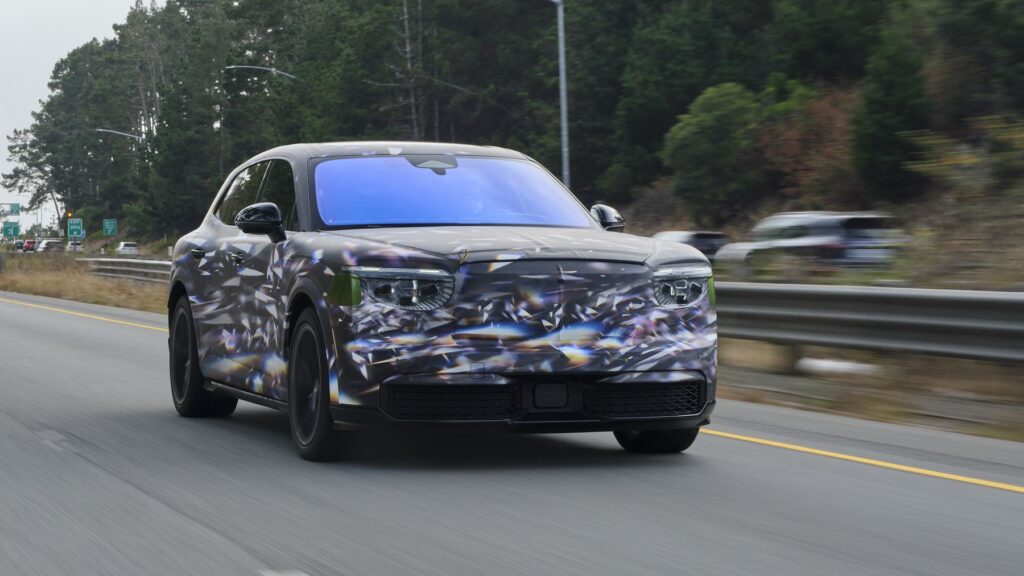
It’s meant to be a driver’s car.“ Notably, the body doesn’t sit artificially flat through fast corners; it leans slightly, deliberately, to give the driver a realistic sense of approaching the limit, regardless of which mode is selected. Body movements, steering, throttle response and braking were all benchmarked against the Continental GT, with a new steering wheel and column to match.
Cabin: Quietly Different From the Crowd
Level 2+ driver assistance is standard, and the Torcal is the first Bentley capable of a trained, automated parking manoeuvre over up to 200 metres, at a choice of three low speeds, though the driver must remain in the car throughout.
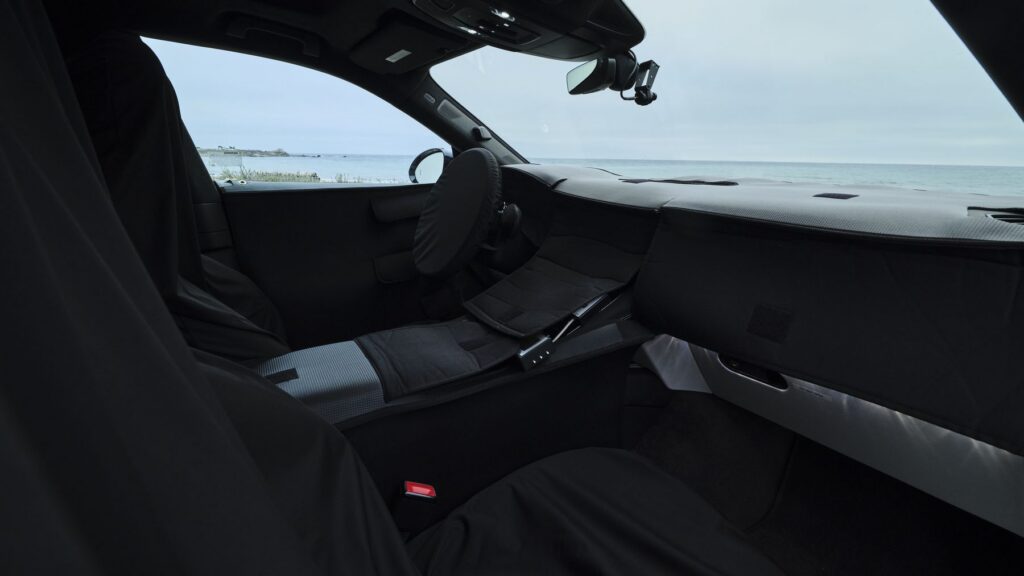
Inside, Bentley resists the trend toward oversized screens, favouring tactile rotary controls instead, what the brand calls „phygital,“ blending physical and digital.
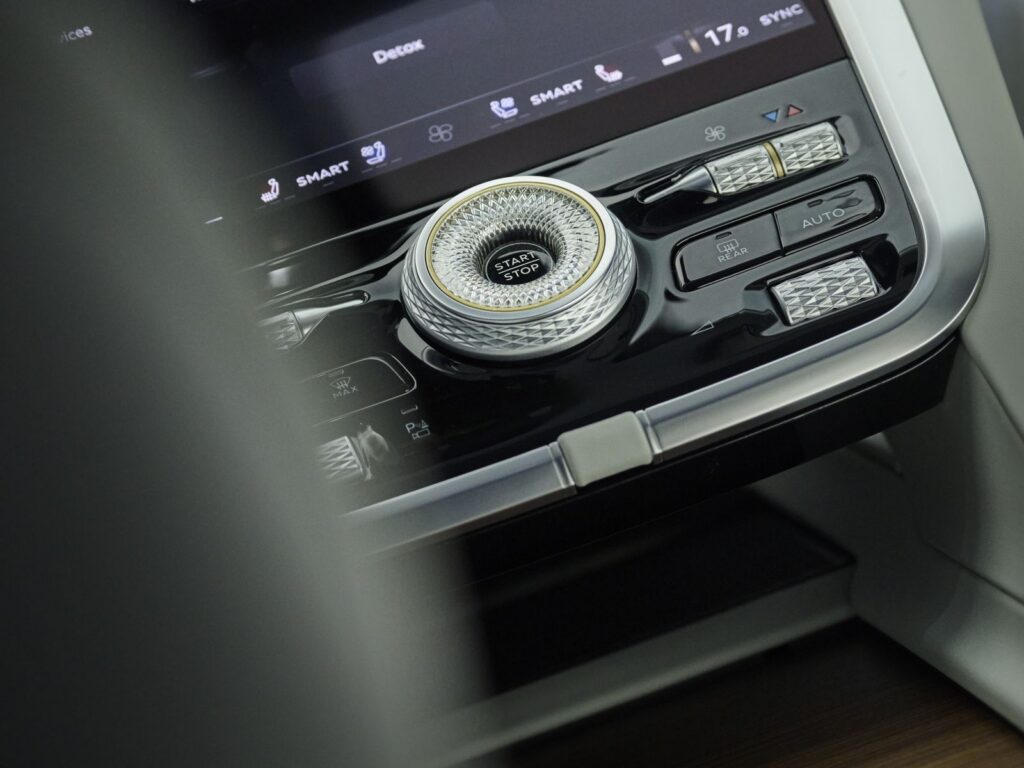
Doors close automatically once the seatbelt clicks in, and cameras identify the driver to load personal preferences. Most distinctive of all is the sound: rather than a synthetic electric hum, Bentley built a composed soundscape with professional musicians, using the 6.75-litre L-Series V8 from 1970 as its reference and blending in real instruments, including drums, for natural imperfections that a computer alone couldn’t produce. The sound’s presence varies with driving mode and can be switched off entirely.
Verdict: A Promising Route, Destination Still Unclear
Strengths: genuine range, fast charging, a thoughtfully tuned chassis, and cabin details that feel distinctly Bentley rather than borrowed. Weaknesses: this remains a first ride rather than a full test, the fine-tuning isn’t finished, and no price has been announced. As a guide leaning on someone else’s map, the Torcal shows real promise in finding its own path. Whether it earns its keep next to the Cayenne it’s built on is a question only a longer drive, and a confirmed price, can answer.