




Every production keeps an understudy who is trusted to hover backstage, rarely to take a bow. In the electric car, that role has long belonged to the electric motor itself, overshadowed by the battery and the badge on the boot. Lately, though, this understudy has been quietly rehearsing a very different part. The story of how it got there says more about where electric cars are heading than any range figure does.
A Quiet Efficiency Nobody Applauds
A combustion engine typically converts under 40 percent of its fuel into motion; the rest disappears as friction and heat. An electric motor, by contrast, now reaches efficiency of up to 95 percent, up from around 90 percent in earlier designs. Almost all the energy that goes in comes back out as motion. It is not a dramatic number, but it is the reason manufacturers and suppliers keep refining these motors: the battery pack remains the most expensive and heaviest part of an electric car, and a more efficient motor is one way to avoid making that pack any larger than it needs to be.
Fewer Rare Earths, More Cleverness
For years, the permanent-magnet synchronous machine, or PSM, was the benchmark: powerful and compact, but reliant on rare earths sourced largely from Asian supply chains. Increasingly, manufacturers are switching to the externally excited synchronous machine, or EESM, whose rotor uses switchable electromagnets instead of permanent magnets. Earlier EESM designs relied on slip rings to feed current to the rotor’s magnetic field, a solution that wore down with use. Newer versions, built by suppliers such as ZF or Mahle, transmit that current contactlessly, by induction. That cuts dependence on neodymium and dysprosium, and it brings a useful side effect: at motorway speed, the rotor’s magnetic field can simply be weakened or switched off, sharpening efficiency exactly where electric cars have traditionally struggled.
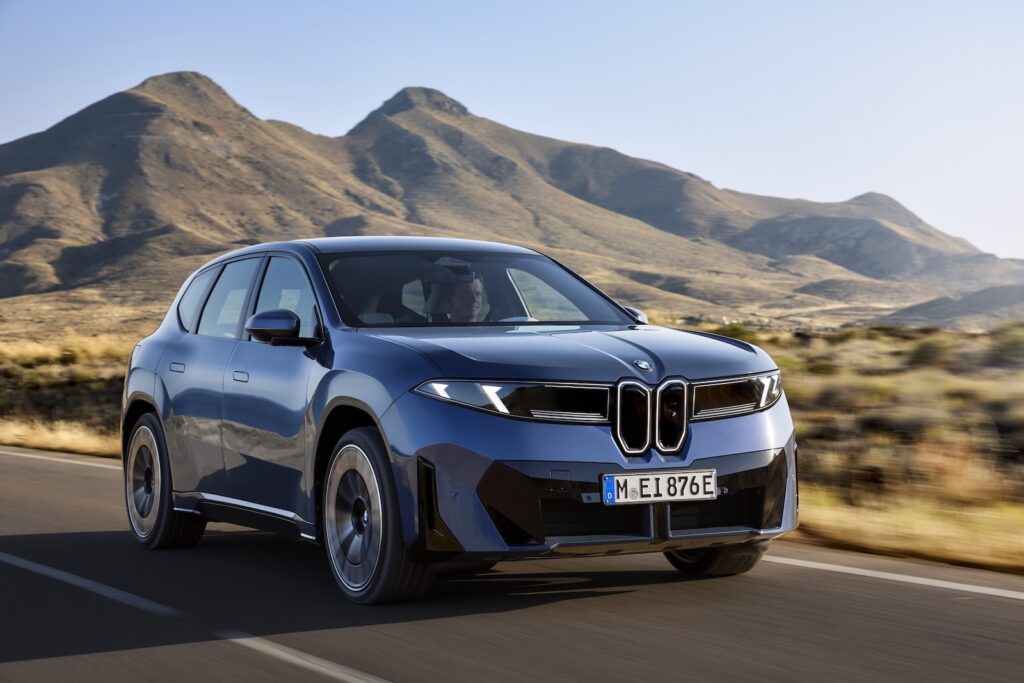
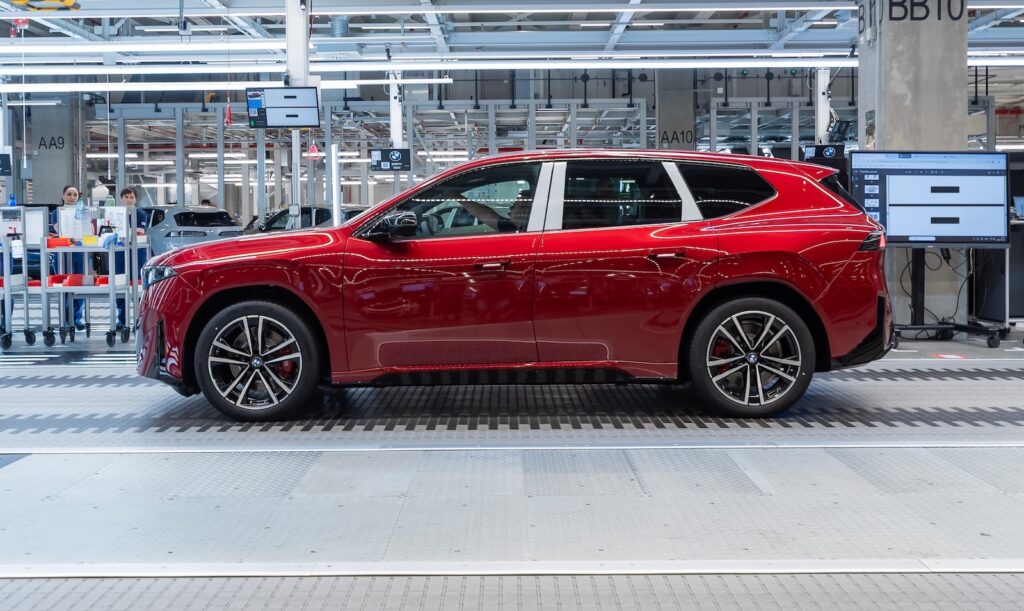
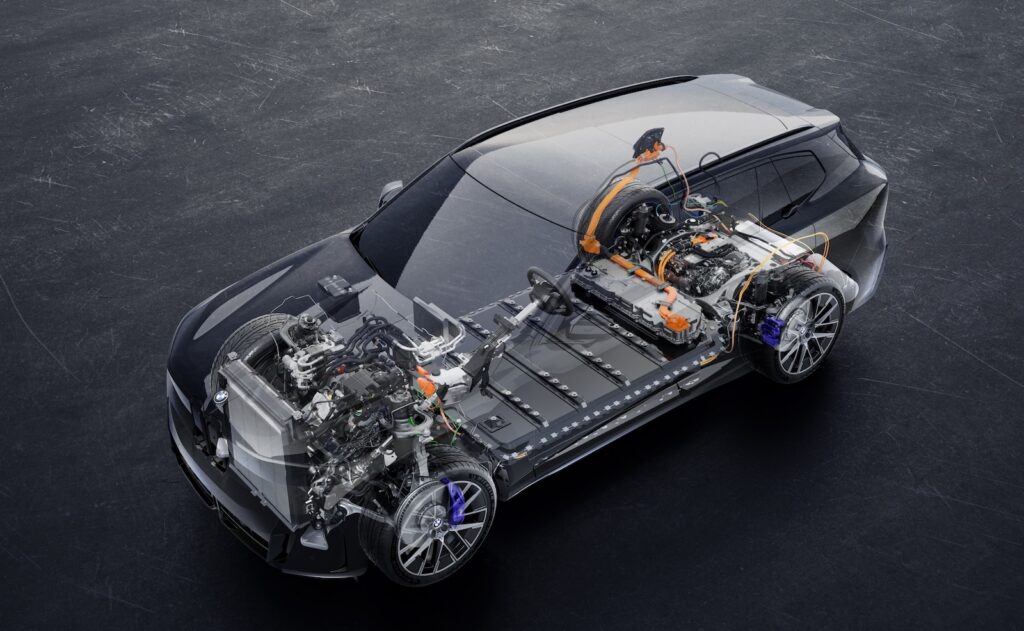
The BMW iX3 puts the theory into numbers. As an all-wheel-drive model, it is driven by two electric motors delivering a combined 345 kW, or 469 PS, and 645 Nm of torque — a high-efficiency current-excited synchronous machine at the rear axle, an asynchronous machine at the front. Against the previous generation, the new drivetrain cuts energy losses by 40 percent, weight by 10 percent, and manufacturing costs by 20 percent.
Hairpins Where Wires Used to Be
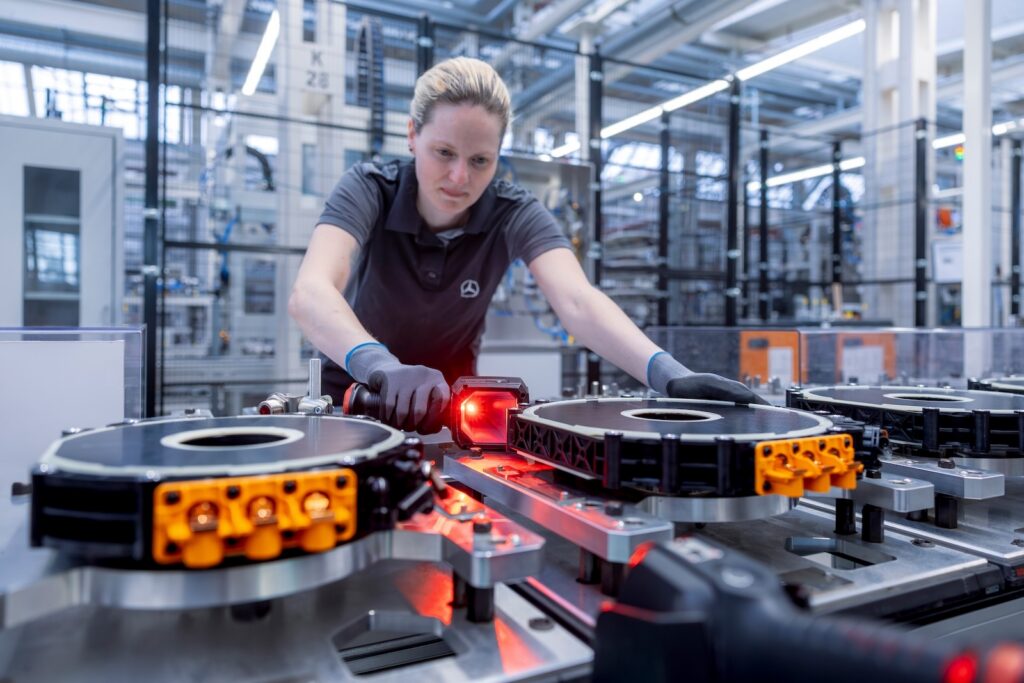
Inside the stator, the classic round-wire winding is giving way to what is known as hairpin technology: rectangular copper bars, shaped like hairpins, inserted and welded into the stator by automated processes rather than wound by hand. The copper fill factor rises from under 50 percent to over 70 percent, which brings higher current-carrying capacity and considerably better heat dissipation through the housing. The practical upshot is a smaller motor for the same output — the understudy taking up less space in the wings.
The Electronics Behind the Motor
A motor is only as good as the inverter managing its current, and that too has moved on. Silicon carbide semiconductors, known as SiC-MOSFETs, are replacing conventional silicon switches in modern inverters. They switch at up to 50 kilohertz, cut heat losses by up to 70 percent, and add five to seven percent to a car’s range. Larger, more powerful electric cars increasingly pair this with an 800-volt architecture, which halves the current needed for the same power output, shrinks cable diameters, saves weight, and reduces thermal stress in the motor — while allowing charging speeds beyond 400 kW in some cases.
Cooling gets less attention still, though modern motors can spin at up to 20,000 rpm or more. Rather than cooling the stator only through an outer water-glycol jacket, newer drives pump synthetic oil directly into the rotating shaft, where centrifugal force flings it onto the stator’s winding heads and the rotor pack. That prevents demagnetisation, or a drop in output, during sustained high-speed driving.
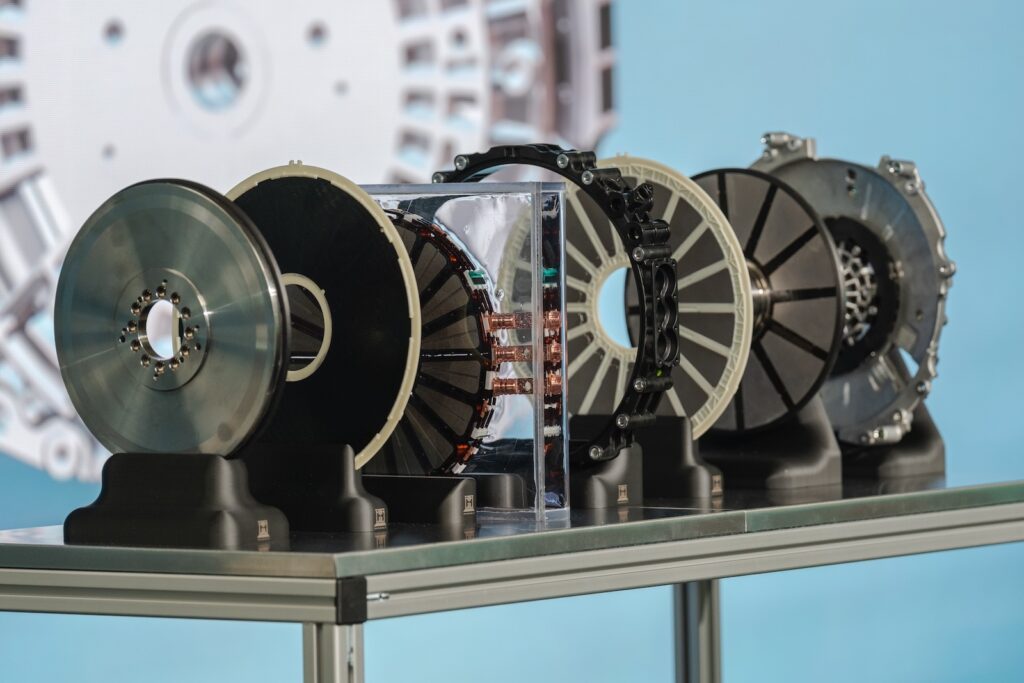
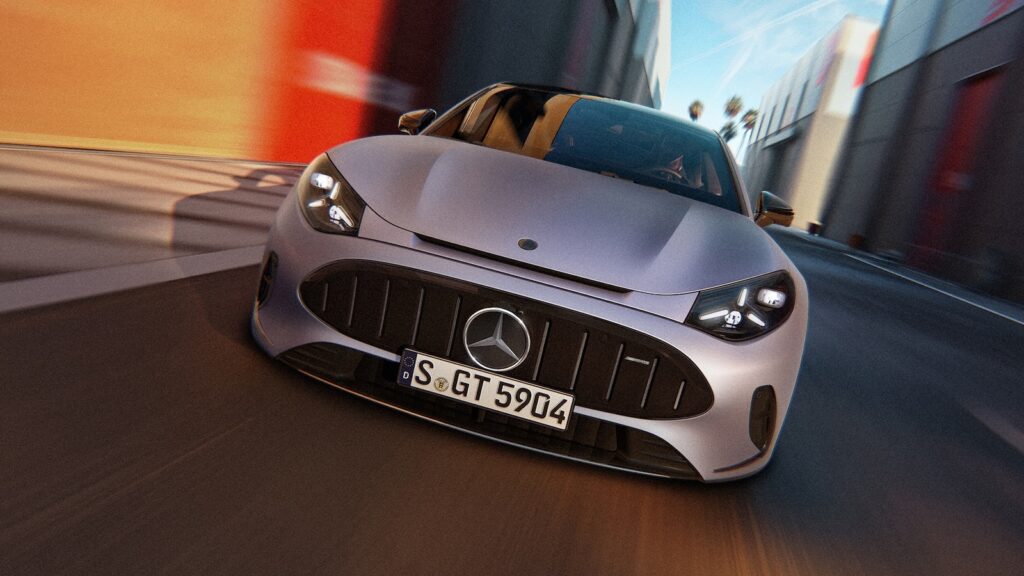
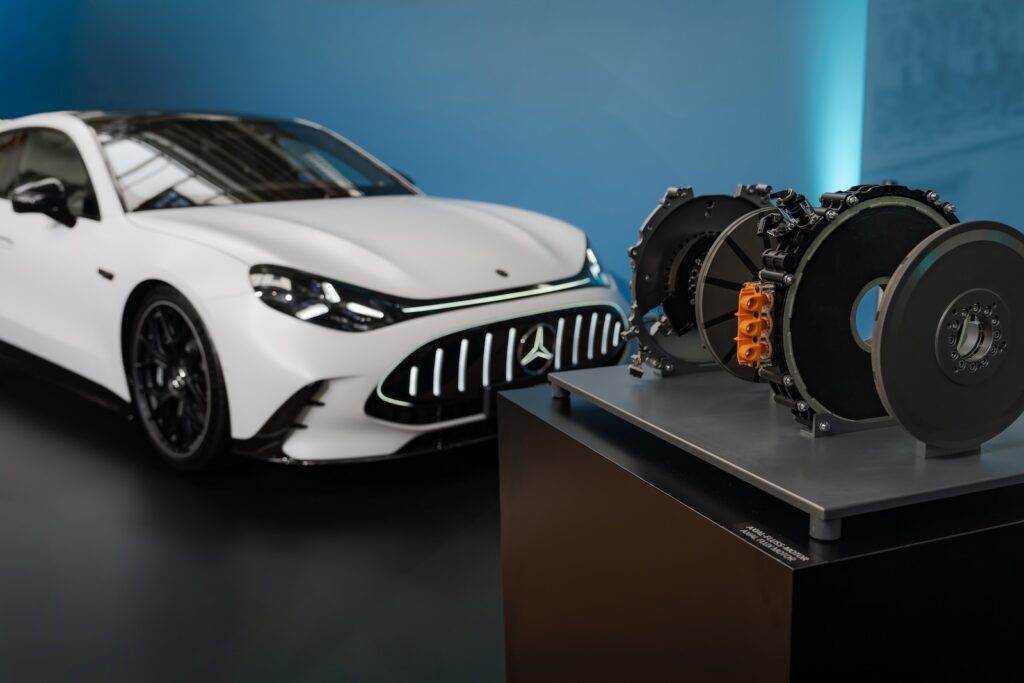
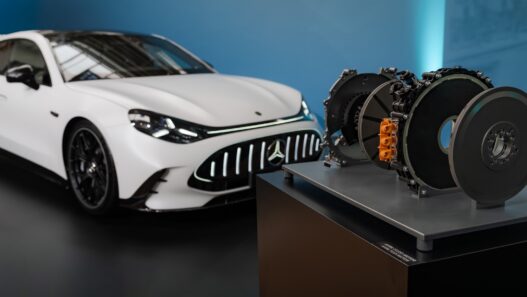
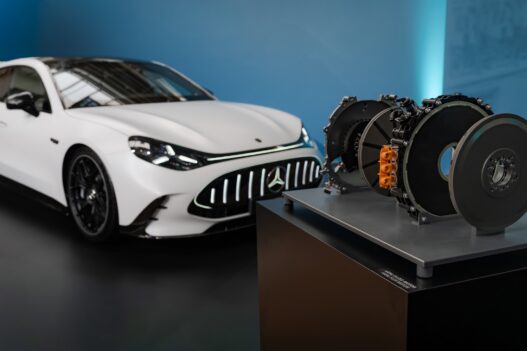
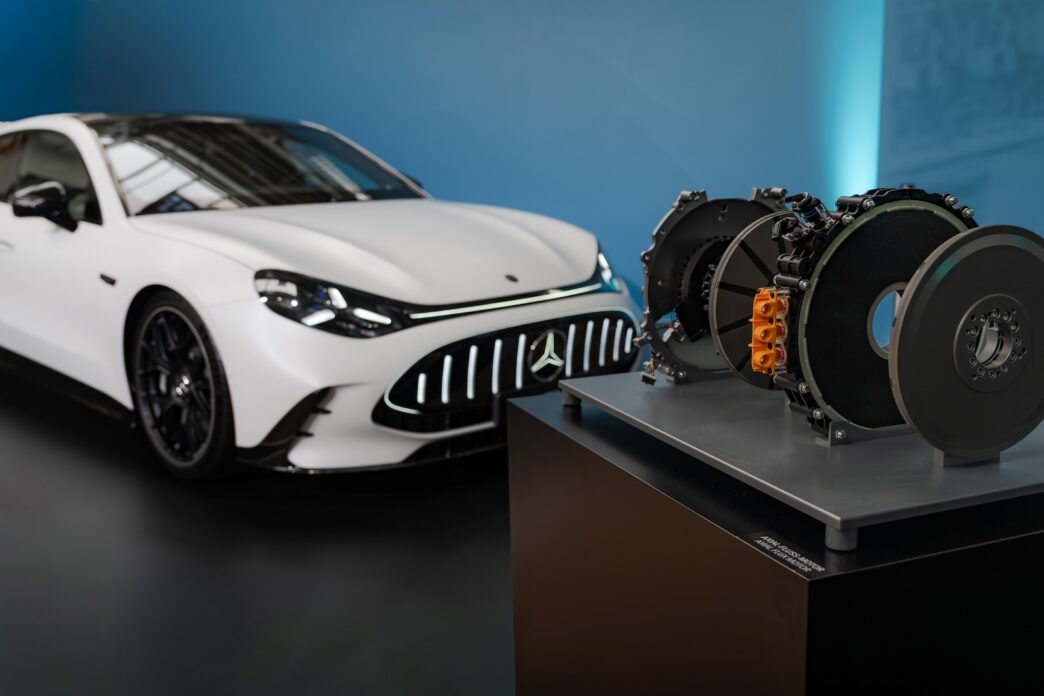
Mercedes has taken a different route entirely with its axial-flux motors, fitted to the high-performance electric AMG GT four-door and AMG SUV, where they produce more than 850 kW combined. The principle was developed by the British motor specialist YASA, now part of Mercedes: the electromagnetic flux runs parallel to the axis of rotation rather than across it, and the components are shaped as thin discs that sandwich the stator from both sides. In these models, the front motor measures roughly nine centimetres across; the two rear motors are just eight centimetres each. Despite that, peak output reaches up to 860 kW, or 1,169 PS, with as much as 1,000 kW, or 1,360 PS, technically possible, and the motors spin at up to 15,000 rpm at top speed.
Verdict: The Understudy Has Learned the Lead
The strengths are real: efficiency up to 95 percent, reduced reliance on rare earths, motors that shrink even as their output grows, and cooling systems built for sustained hard use. The weaknesses are just as real, if less visible from outside: much of this progress happens deep inside the drivetrain, invisible on a spec sheet and rarely marketed with any enthusiasm. That, in the end, is rather the point. The electric motor was never meant to take the bow. It has simply become too good at its job to stay in the wings.