




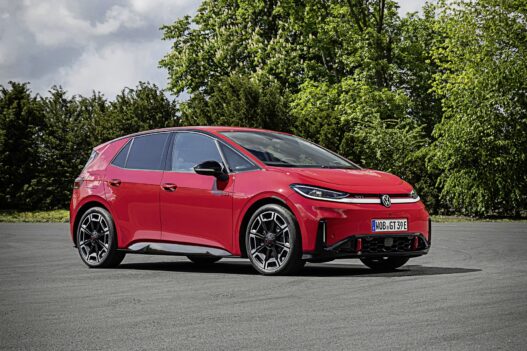
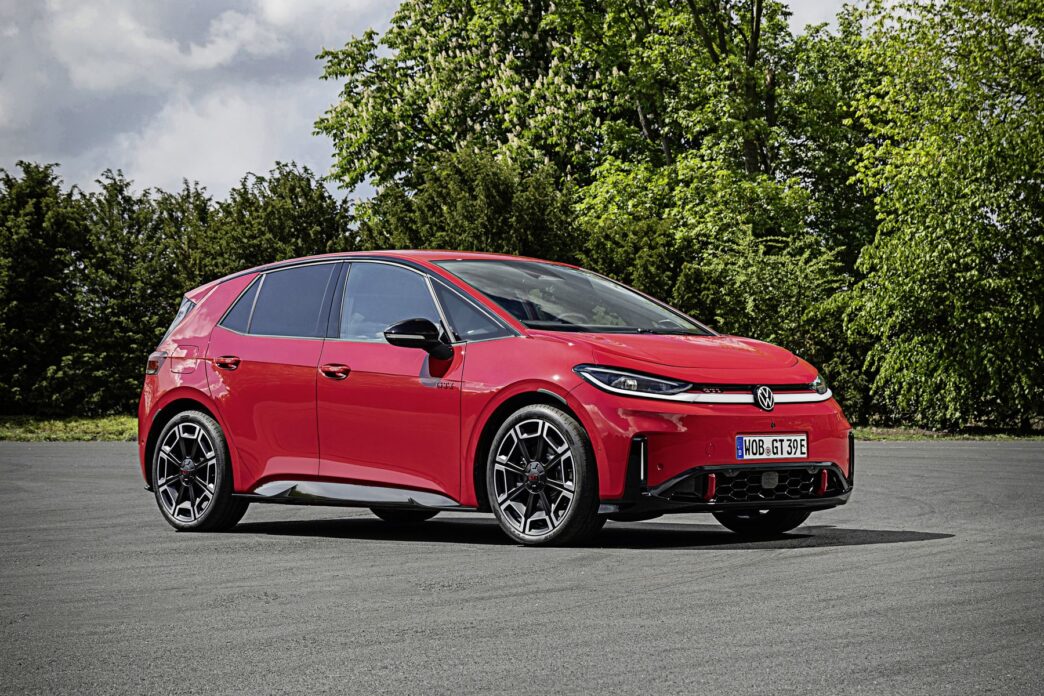
Family businesses survive by handing the name down carefully: same sign above the door, same reputation to protect, often a completely different way of actually running things once the next generation takes over. Volkswagen has just done exactly that with three letters that have meant something in Europe since 1976. The GTI badge, previously reserved for front-wheel-drive Golfs, now sits on an electric hatchback that sends its power through the rear wheels instead.
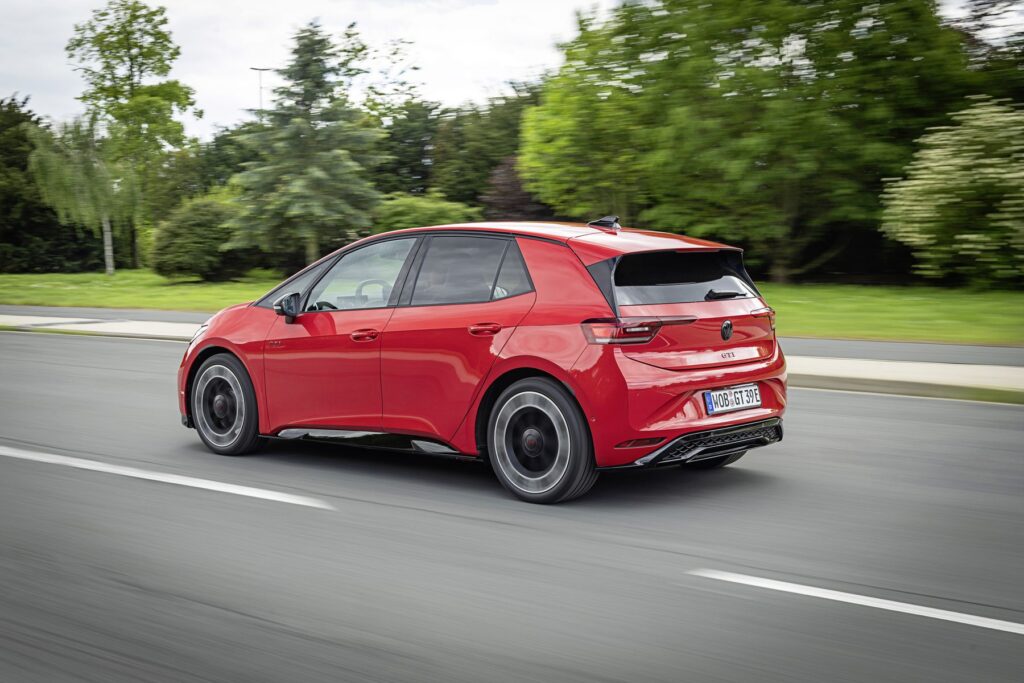
Inheriting a Name, Rewriting the Method
The ID.3 GTI replaces the outgoing ID.3 GTX Performance, a car that offered identical performance but carried none of the emotional weight the GTI badge still commands. „We lost what Volkswagen stands for, the connection to our fans,“ says Martin Sander, still Volkswagen’s board member for sales and marketing, explaining the thinking behind the switch. After early ID. years defined by cost-driven interiors and a profit-first approach, the brand is pushing back toward what it calls „True Volkswagen“: clear design, everyday usability, and genuine emotion, qualities a compact GTI is well placed to deliver.
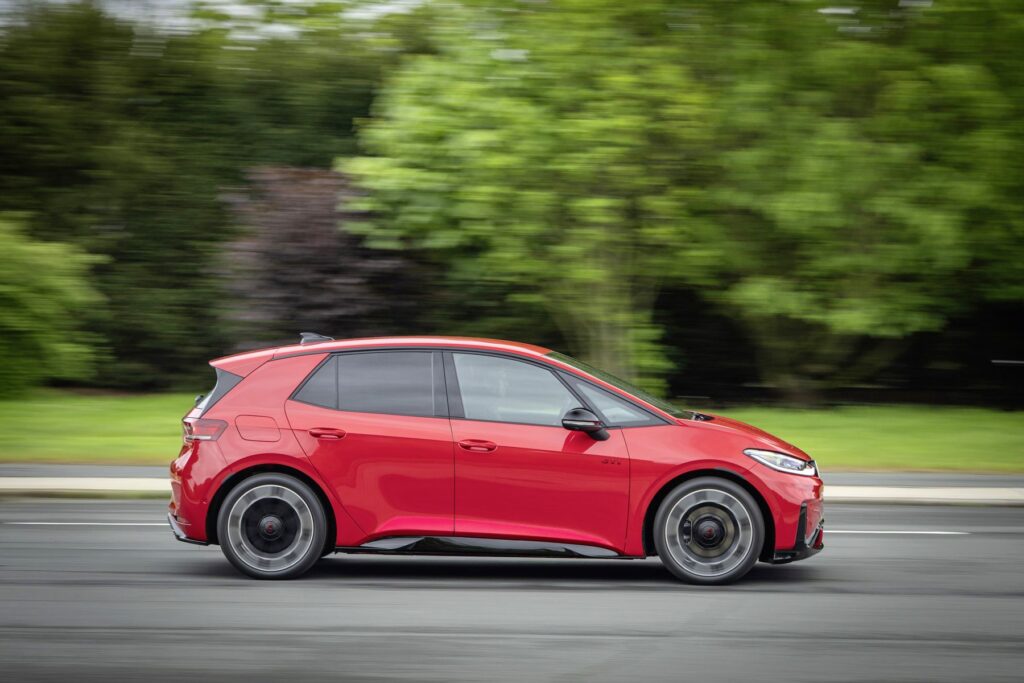
Solid Figures, No Records
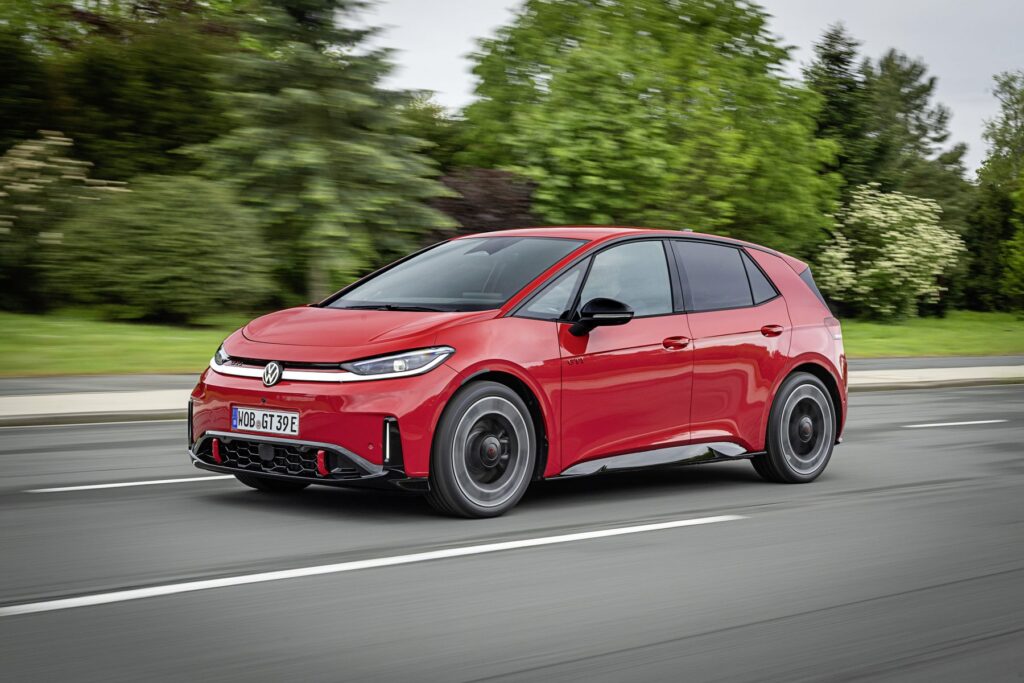
A rear-mounted motor, badged APP550, produces 240 kW, or 326 PS, and 545 Nm of torque, enough for a 0-100 km/h sprint of 5.6 seconds using launch control, before an electronic limiter steps in at 200 km/h. That makes it the most powerful series-production GTI in fifty years. The 79 kWh net battery delivers up to 601 km of WLTP range, and a maximum charging rate of 183 kW brings it from 10 to 80 percent in around 29 minutes. Solid numbers, not a sensation, as Volkswagen itself effectively admits: the standard ID.3 Neo, sharing the same battery, actually manages 629 km on less power.
Where the Real Inheritance Shows Up
Power was never really the point, since the outgoing GTX Performance already matched these figures exactly. What actually separates GTI from Neo is drivetrain, chassis and tuning: progressive steering and adaptive DCC sport suspension come as standard, while engineers reworked the front axle’s elastokinematics, springs, dampers, stabilisers and tyre tuning specifically for this car. A dedicated GTI driving mode sharpens throttle response, steering and damping, and unlocks launch control. The real headline, though, is structural: this is the first GTI ever built with rear-wheel drive, breaking a pattern that held across all eight generations of the front-driven Golf GTI.
The Shopfront Stays Familiar
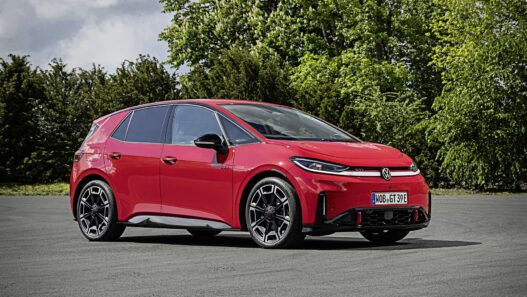
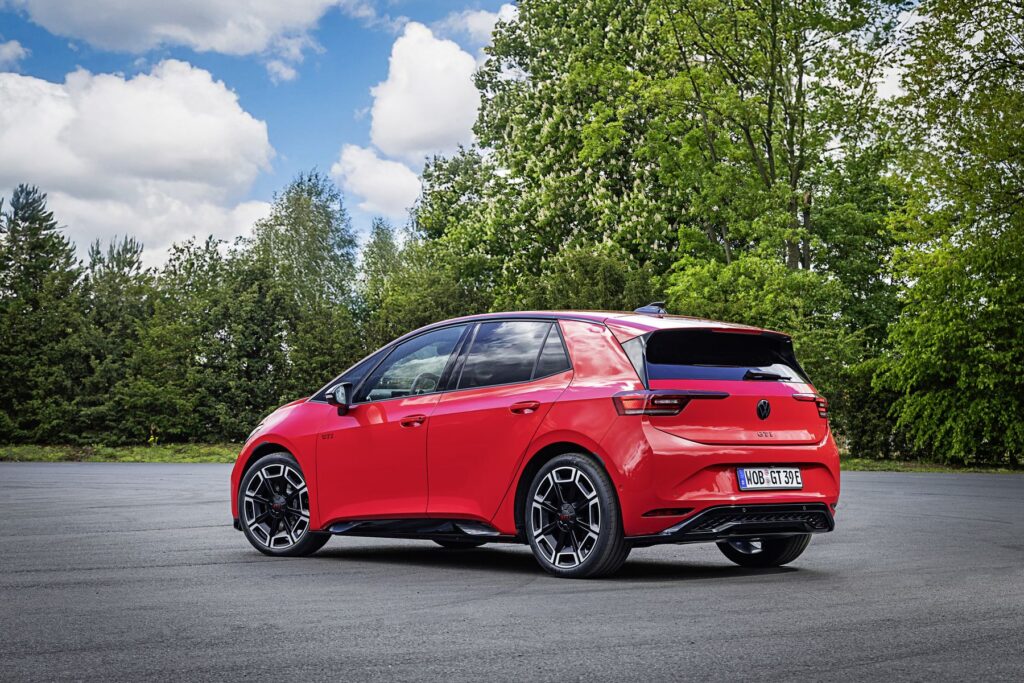
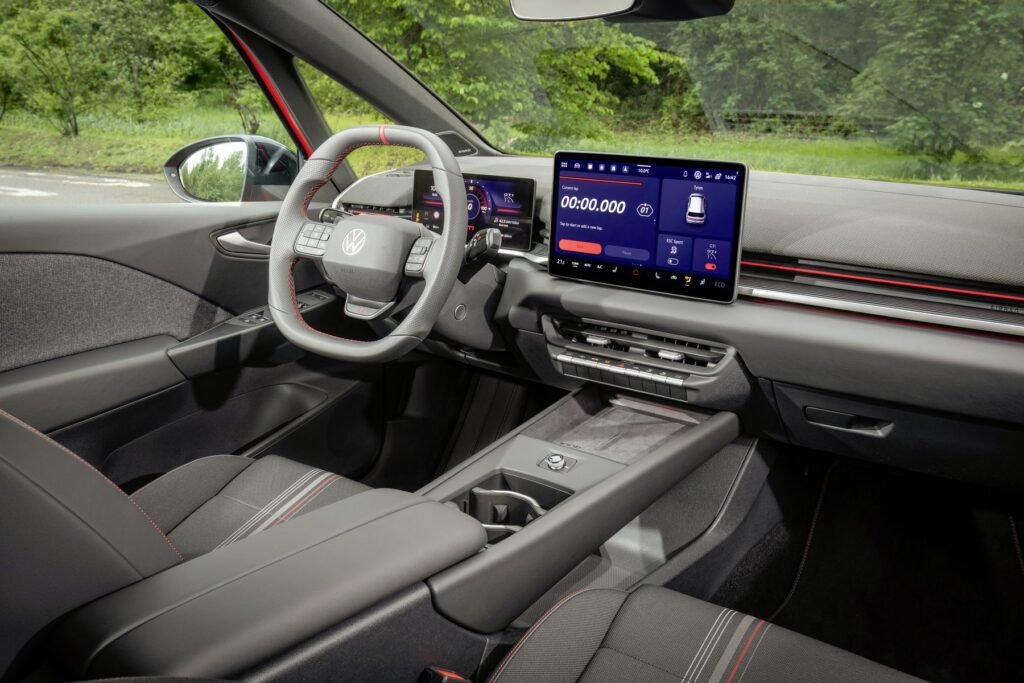
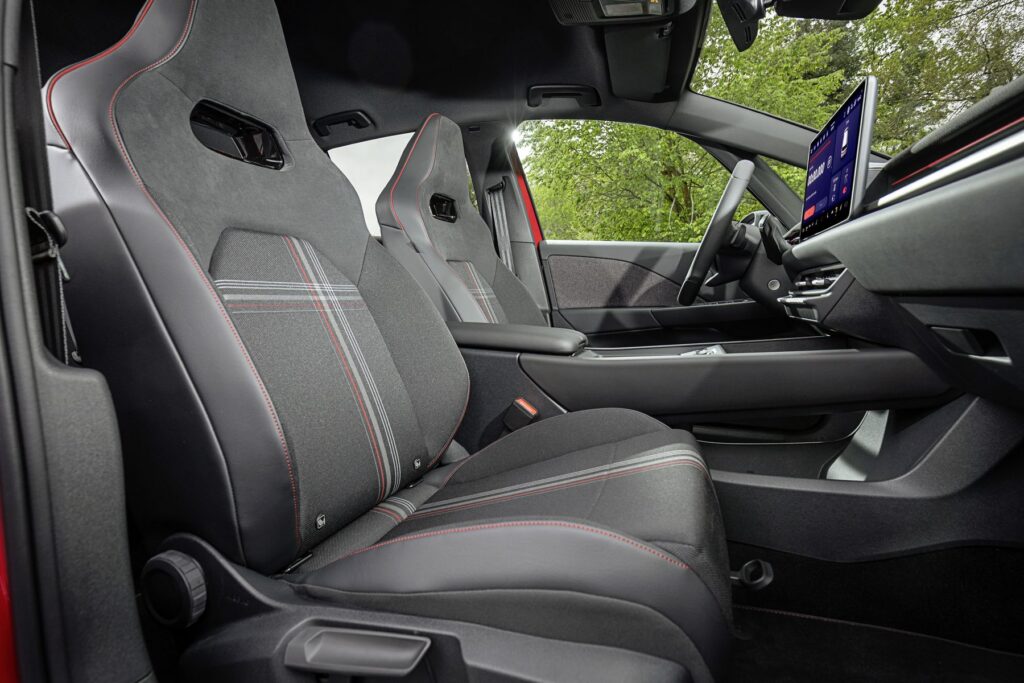
Visually, the ID.3 GTI raids its own archive rather than inventing anything new: a red stripe referencing the original 1976 Golf GTI, the honeycomb grille that’s been a GTI fixture for decades, and the return of classic Tornado Red paint. Seat trim reinterprets the familiar tartan pattern, and standard 20-inch wheels carry the name „Wörthersee,“ a nod to the long-running GTI meet in Austria’s Carinthia region. Inside, the cabin largely mirrors the ID.3 Neo, upgraded with richer materials, a 10.2-inch instrument display and a 12.9-inch touchscreen, plus sport seats, GTI graphics and red accents throughout. A synthetic engine note and red light effects add theatre, whether that reads as homage or crutch depends on taste. Practical GTI ownership hasn’t been sacrificed either: one-pedal driving and vehicle-to-load functionality carry over from the rest of the ID.3 range, unchanged and unglamorous.
A Rival From Inside the Same Building
The most serious competition comes from within the same corporate family: the new Cupra Born VZ matches the ID.3 GTI almost exactly, with 240 kW, or 326 PS, 545 Nm, the same 79 kWh battery, identical 183 kW charging and the same 5.6-second sprint. Cupra leans into sharper handling and a louder, more extroverted presentation, leaving Volkswagen to defend the harder brief: blending everyday usability, precision and restraint with genuine driving enjoyment, the traditional GTI range that a flashier sibling doesn’t need to bother with.
Verdict: Same Name, New Proprietor
The ID.3 GTI inherits a genuinely famous name and largely earns the right to use it, not through bigger numbers but through a chassis built specifically to honour what the badge has always meant. What it can’t yet prove, absent a proper drive and any pricing at all, is whether the new proprietor runs the business as well as the old one did. The sign above the door reads exactly as it should. Who’s actually behind the counter is still, for now, an open question.