




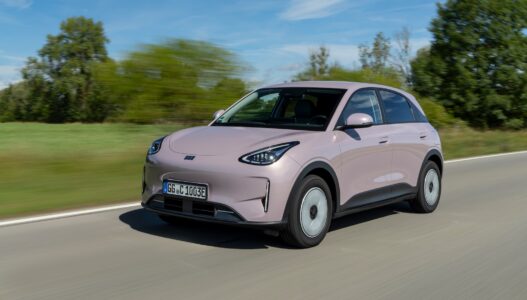
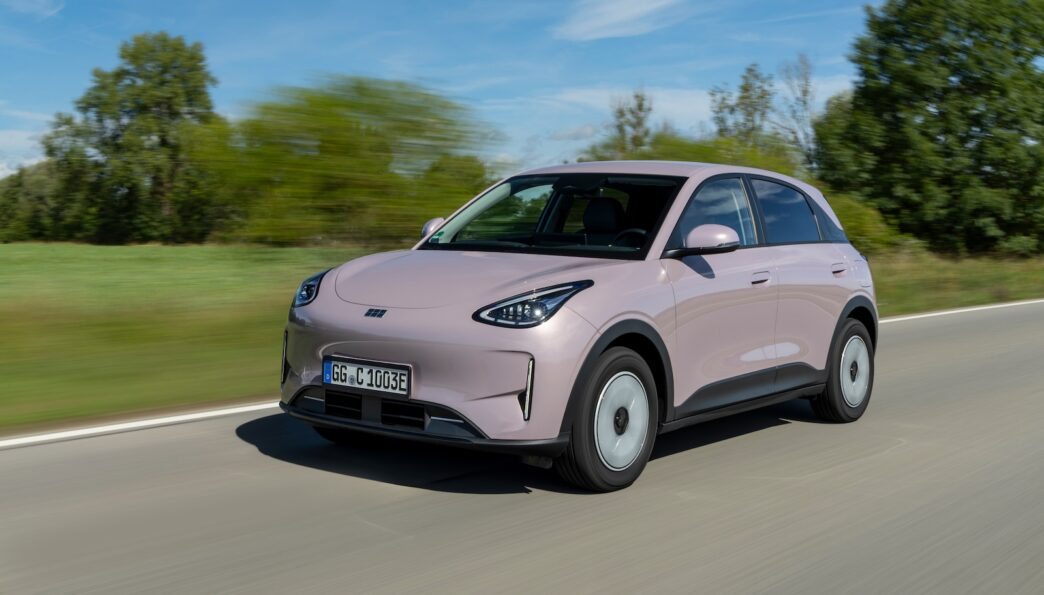
Every bestseller eventually gets a paperback edition: same story, same characters, a noticeably cheaper cover and a spine that won’t survive as many readings. Geely’s new E2 is the paperback edition of the small electric crossover, arriving at a price that makes the hardback next to it look almost embarrassed of itself.
A Familiar Story, Priced to Move
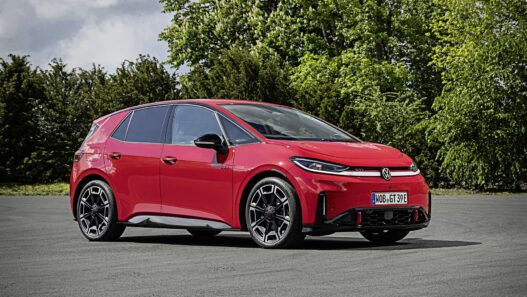
Electric car prices have been sliding for a while now, with Dacia and Leapmotor already breaking below €20,000. Geely’s E2 joins that shelf directly, and it goes straight for the VW ID Polo’s spot: a 4.14-metre crossover with room for five and 375 litres of boot space. Where the ID Polo starts in stripped-down trim at nearly €25,000 and climbs well past €30,000 with any real options, the E2’s entry-level Pro version costs €19,990, undercutting its German rival by roughly €5,000.
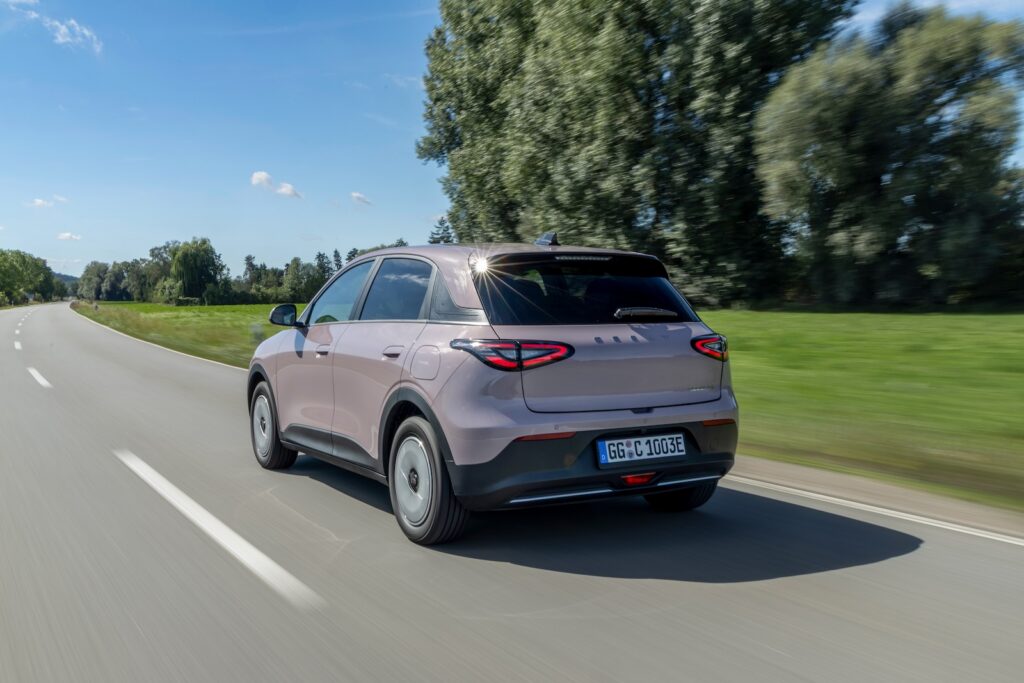
That base Pro trim comes with a modest 60 kW, or 82 PS, rear motor and a genuinely tiny 35 kWh battery, the thinnest paper stock on the shelf. Stepping up to Max (from €23,990) or Ultra (from €26,990) swaps in a stronger 85 kW, or 115 PS, motor and a larger 45 kWh battery. All three come with an eight-year, 200,000 km warranty, a reassuring dust jacket on an otherwise budget production.
Inside: Hard Plastic, Honest Pricing
Cabin quality reflects the printing costs. Solid but unmistakably hard plastic surrounds two screens, 8.8 and 14 inches, whose menus present information a little less clearly than they should. The faux-leather seats offer limited adjustment up front, and the electric window switches, in a quirk shared with Leapmotor, work back to front from what most drivers expect.
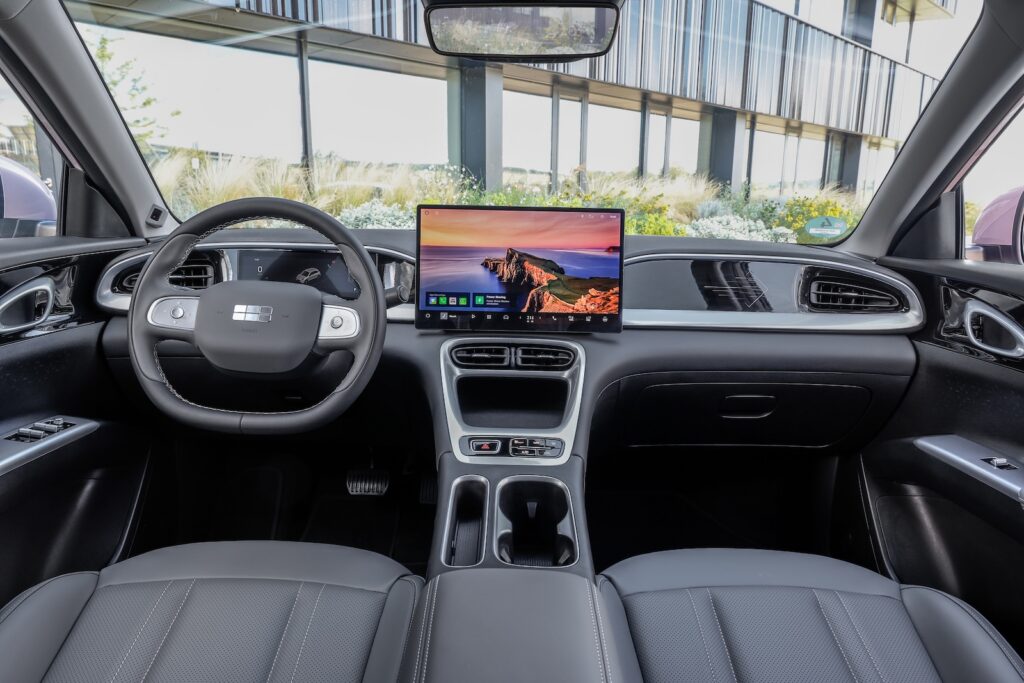
Seat heating covers the front only, and steering wheel heating disappears entirely on the base model. Climb to the Ultra trim and the story gets noticeably better bound: a powered tailgate, all-round cameras, two-tone paint and ambient lighting running through more colours than the interior strictly needs. The boot, meanwhile, expands generously from 375 litres to more than 1,320 with the rear seats folded or the false floor removed, plus a useful 70-litre frunk under the bonnet.
On the Road: Readable, Not Thrilling
At over 1.4 tonnes, the E2 doesn’t do much with its 150 Nm of torque, and nobody buying this car should expect pace. What works better than the numbers suggest is the chassis: a low centre of gravity and steering that’s precise, if a touch too light, make the car feel more composed than its modest outputs imply.
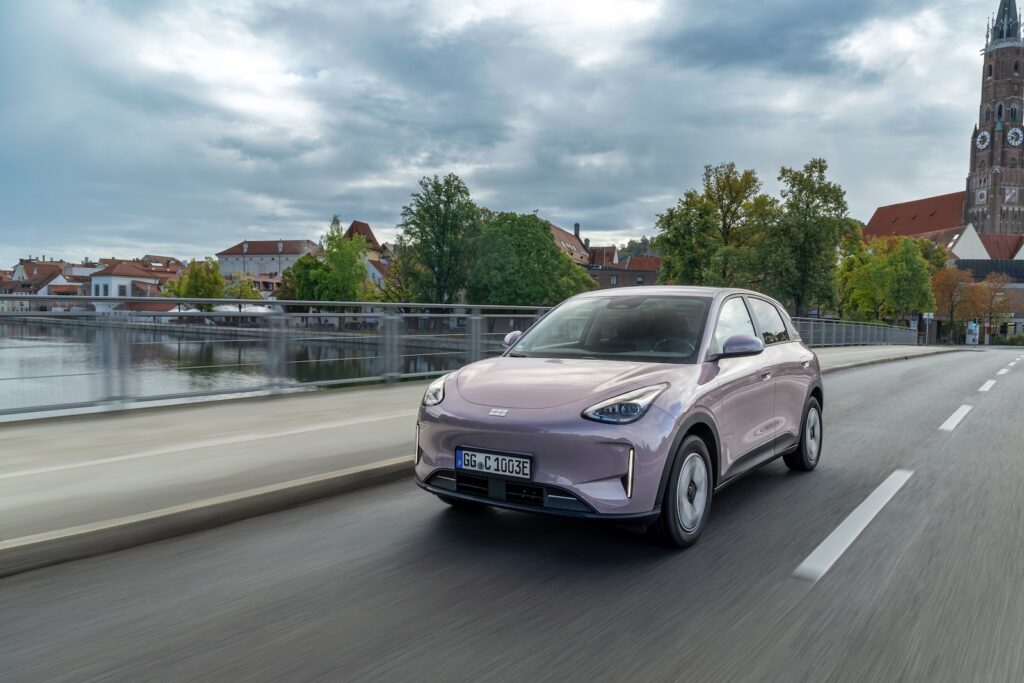
The real limitation shows up at 130 km/h, where the top speed caps out, leaving little margin for overtaking or the occasional stretch of faster road. Charging tells a similar story: 80 kW on Max and Ultra, dropping to a genuinely weak 60 kW on the Pro, numbers that matter less if most charging happens overnight at home. Range runs to 345 km on the larger battery, or 250 km on the entry-level Pro, figures that suit a city car rather than a long-distance one.
A Drivetrain Choice Few Rivals Share
One detail worth noting before the verdict: the E2 drives its rear wheels, a layout most rivals in this price bracket skip in favour of the cheaper, simpler front-wheel setup.
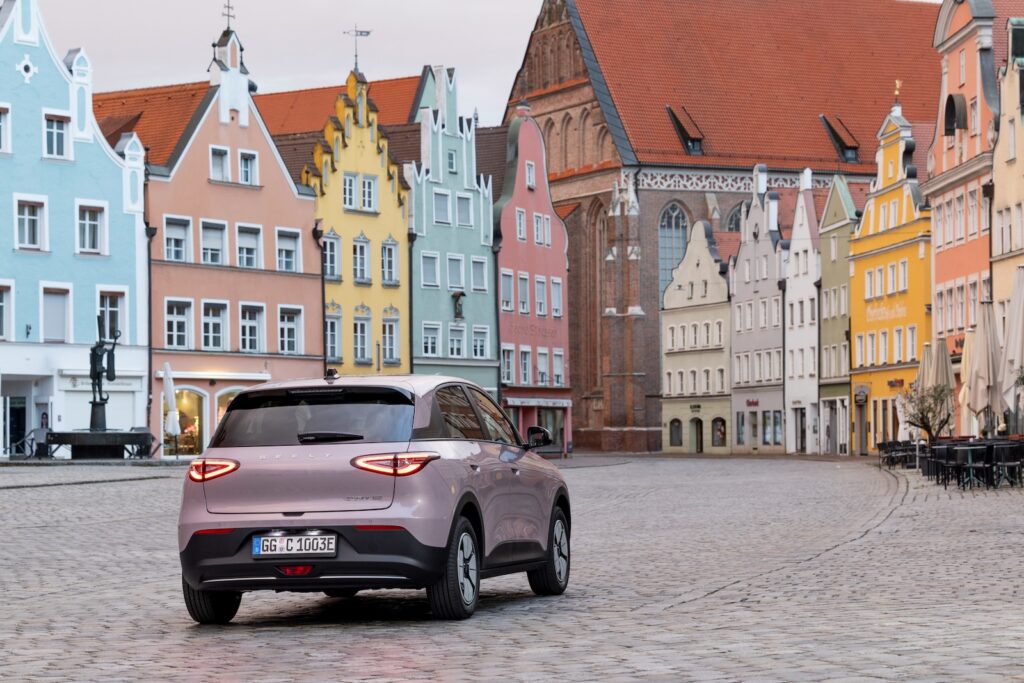
Paired with that low centre of gravity, it gives the E2 a more settled, balanced feel through town than the modest spec sheet suggests, proof that not every cost-saving decision landed in the same place. It’s the sort of quiet detail a paperback sometimes gets right even when the cover looks identical to a dozen others on the same shelf.
Verdict: Cheaper Binding, Same Basic Story
The E2 won’t win any prizes for print quality: charging is slow, top speed is timid, and the cabin plastics remind you exactly where the savings came from. But the underlying story, decent space, a genuinely useful boot, a competitive base motor and one of the longest warranties in the class, reads the same whether you paid hardback or paperback prices.
For buyers who just want to read the book rather than display it on a shelf, that’s a trade worth making. Just choose the edition carefully: the base Pro, with its smaller battery and weaker charging, reads more like an abridged sample chapter than the full novel, and most buyers will want to pay the little bit extra for Max or Ultra to get the complete story.