


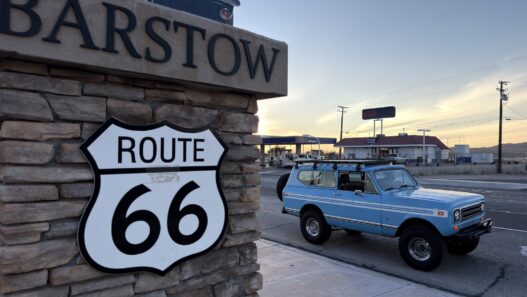


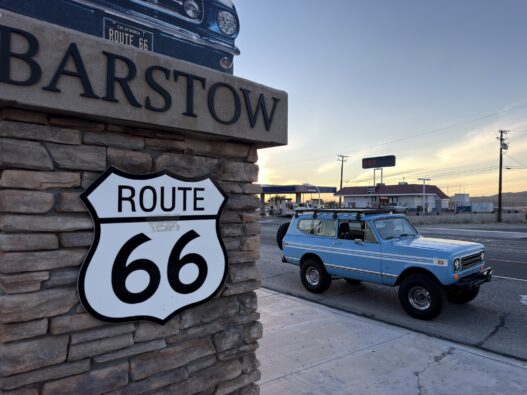
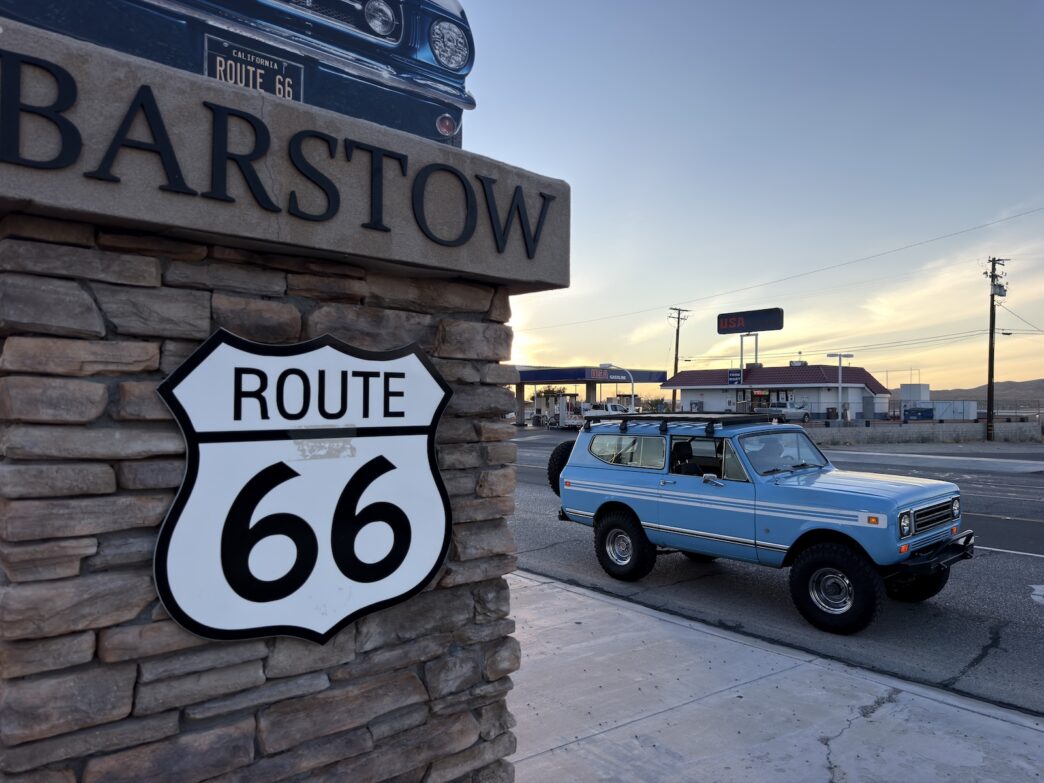
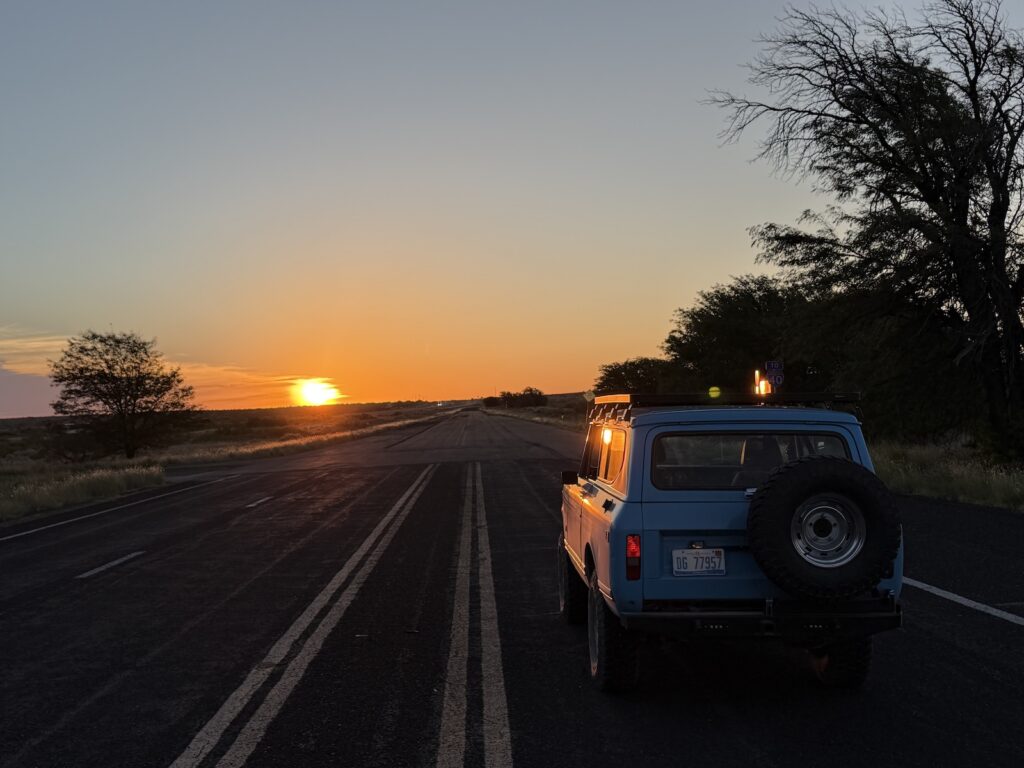
A postcard shows a road the way it wants to be remembered, sun-bleached and empty and perfect. A field notebook records the road as it actually is, gravel in the margins, sweat-smudged ink, the entries that don’t photograph well. A 1979 International Harvester Scout II, pale blue and thoroughly weathered, spent six days as the notebook rather than the postcard on Route 66’s 100th birthday, taking down everything a polished hire car would have smoothed over.
A Road That Outgrew Its Own Pavement
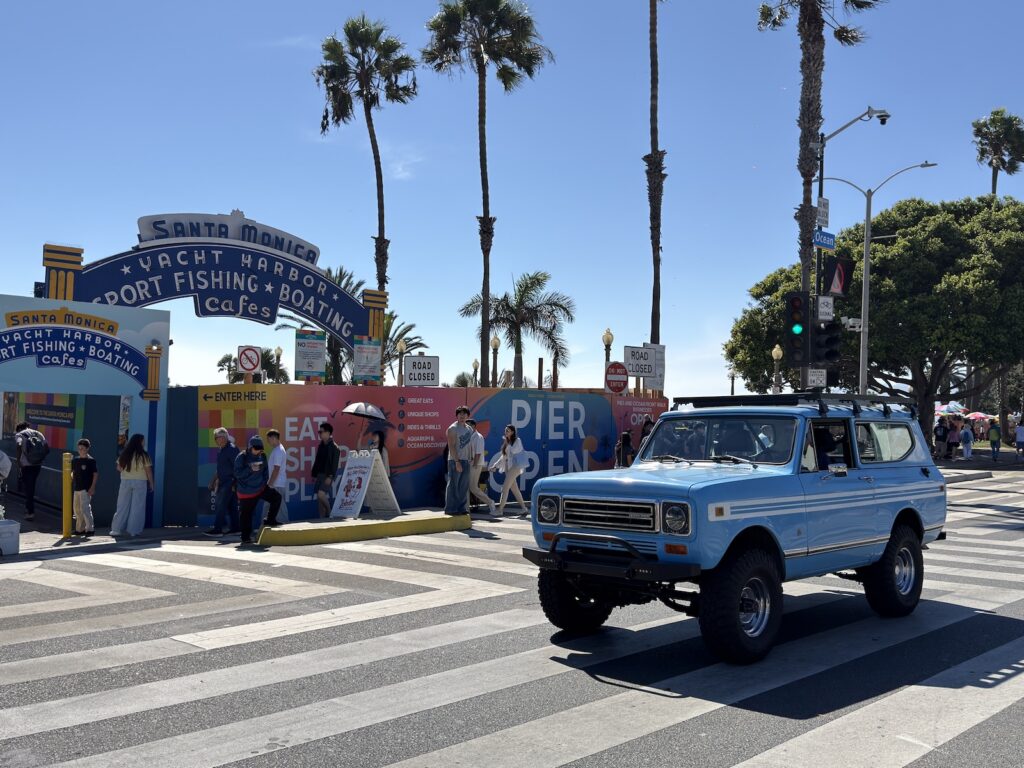
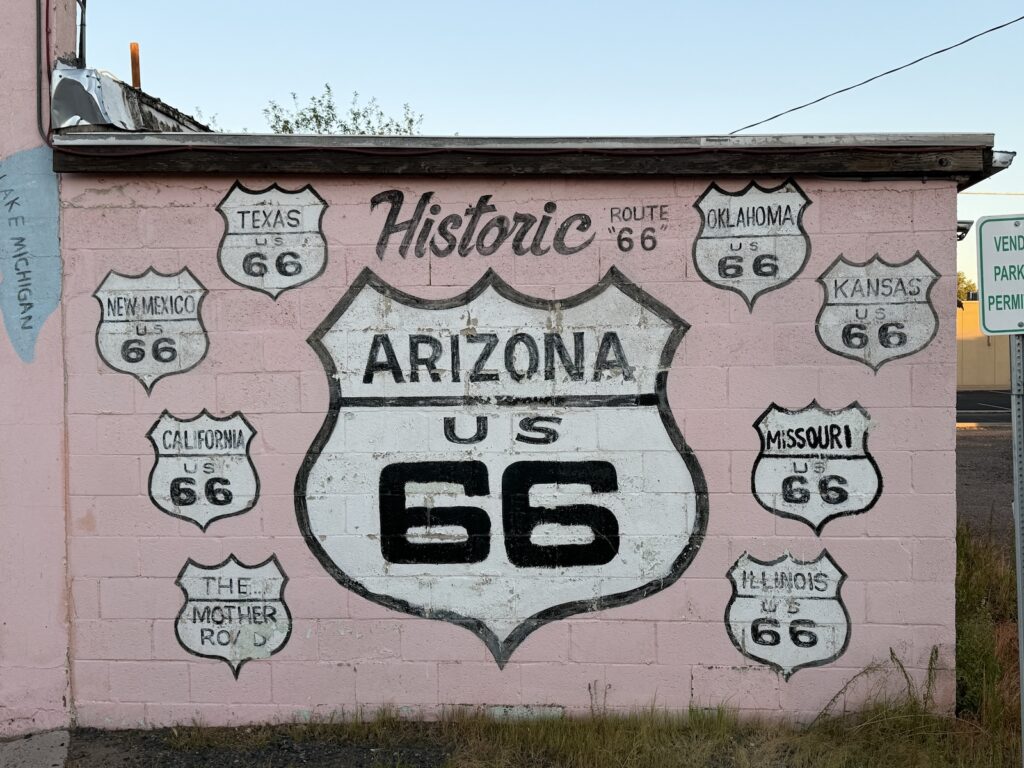
Route 66 officially opened in November 1926, a roughly 4,000 km link between Chicago and the Santa Monica Pier, mostly unpaved for its first decades. Businessman Cyrus Stevens Avery successfully lobbied for the name that spring, and the road went on to outshine nearly everything except the Silk Road for sheer cultural weight, inspiring diners, films, motels and the entire „Go West“ myth. This particular trip ran the unfashionable direction, west to east, against the grain of most pilgrims.
The Understudy’s Credentials
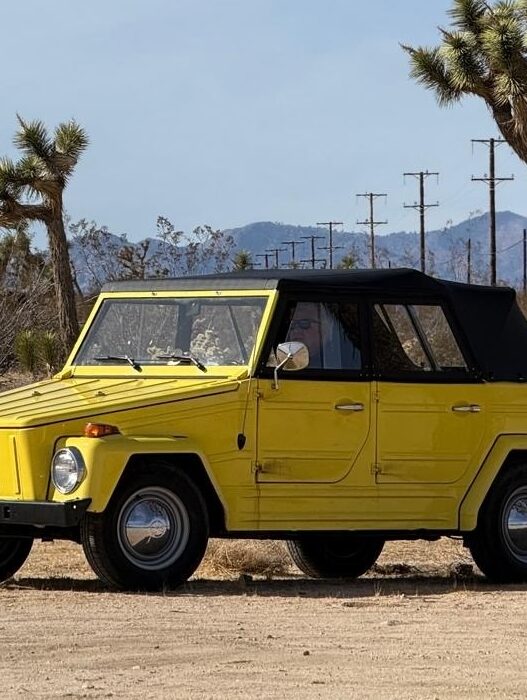
The Scout II carries a 5.7-litre V8 producing a modest 132 kW, or 180 PS, alongside four-wheel drive, a ladder chassis and enough ground clearance for the stretches still unpaved a century on. Nearly every fuel stop brought the same mistaken question, whether it was a Ford Bronco, when in fact the two share little beyond a passing front-end resemblance. International Harvester, once a farm equipment maker, built the Scout from the early 1960s to the late 1970s before union troubles split the company into Navistar, now owned by Volkswagen’s commercial vehicle arm. Volkswagen has since revived the Scout name as an electric off-road brand, with the Traveler and Terra due in the US from 2028, a connection almost nobody waving from a passing pickup seemed to know.
Heat, Gravel and the Jericho Gap
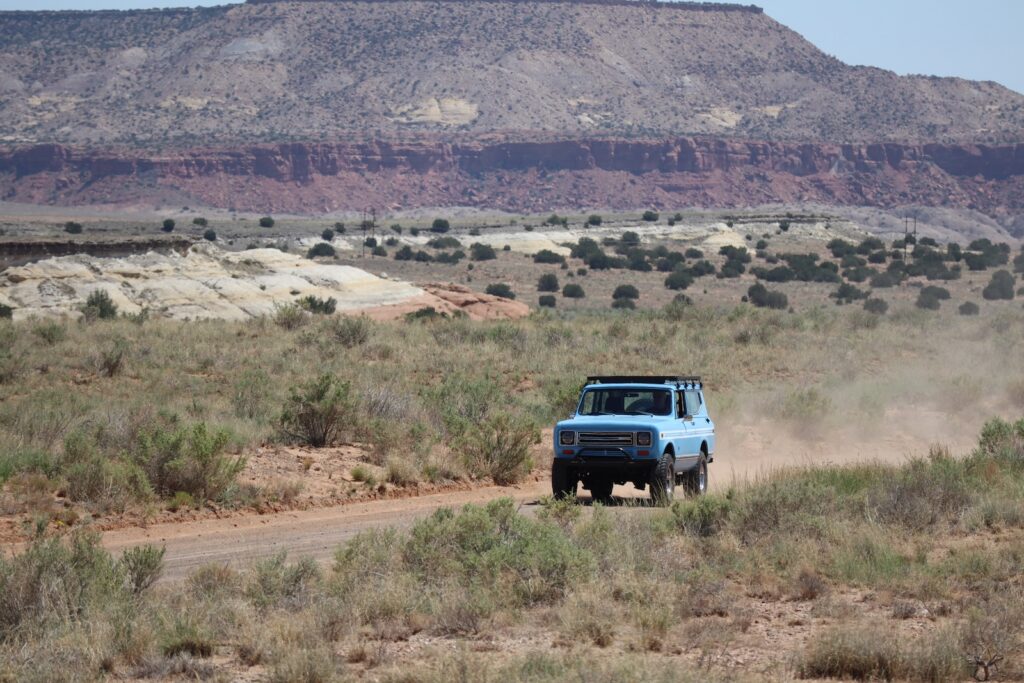
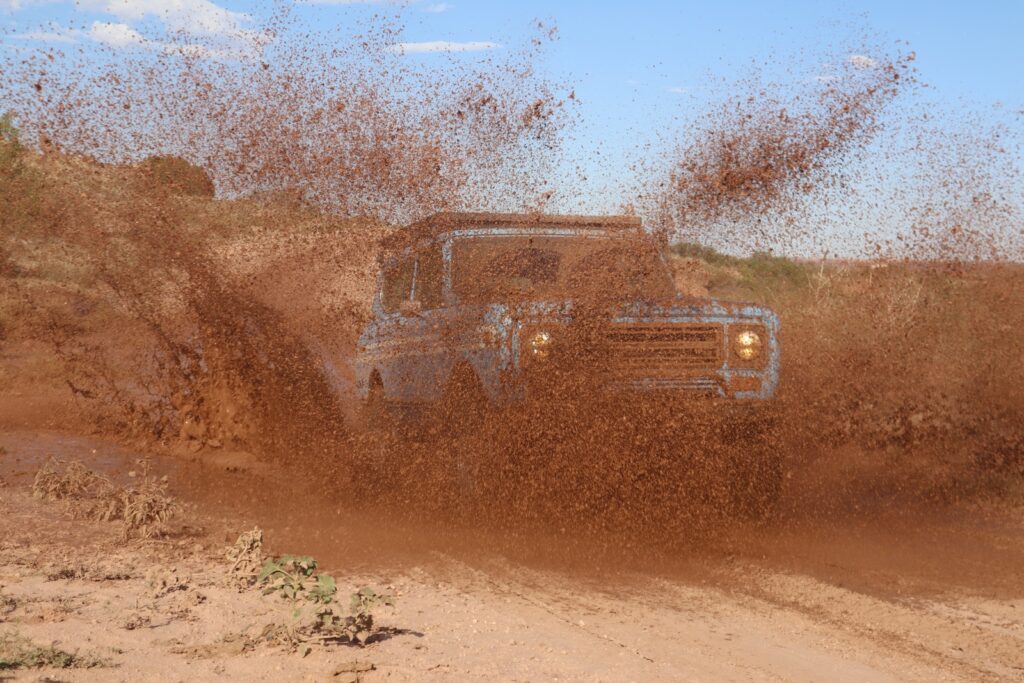
Temperatures climbed from a mild 30°C at the Pacific start to more than 45°C through the desert, touching 47°C near Needles by the Colorado River, hot enough that the air conditioning got switched off on steep climbs purely to spare the engine and drivetrain. Between Alanreed and Groom in Texas, the Jericho Gap remains genuinely unpaved, 19 miles of gravel, clay and rubble including a water crossing, exactly the terrain that justified choosing four-wheel drive and a ladder frame over anything more comfortable. Early travellers in the late 1920s had no such luxury at all, and with only 850 of the original 2,500 miles paved, their journey routinely stretched two to four weeks rather than the one or two this modern version allowed.
A Road of Contrasts, Then and Now
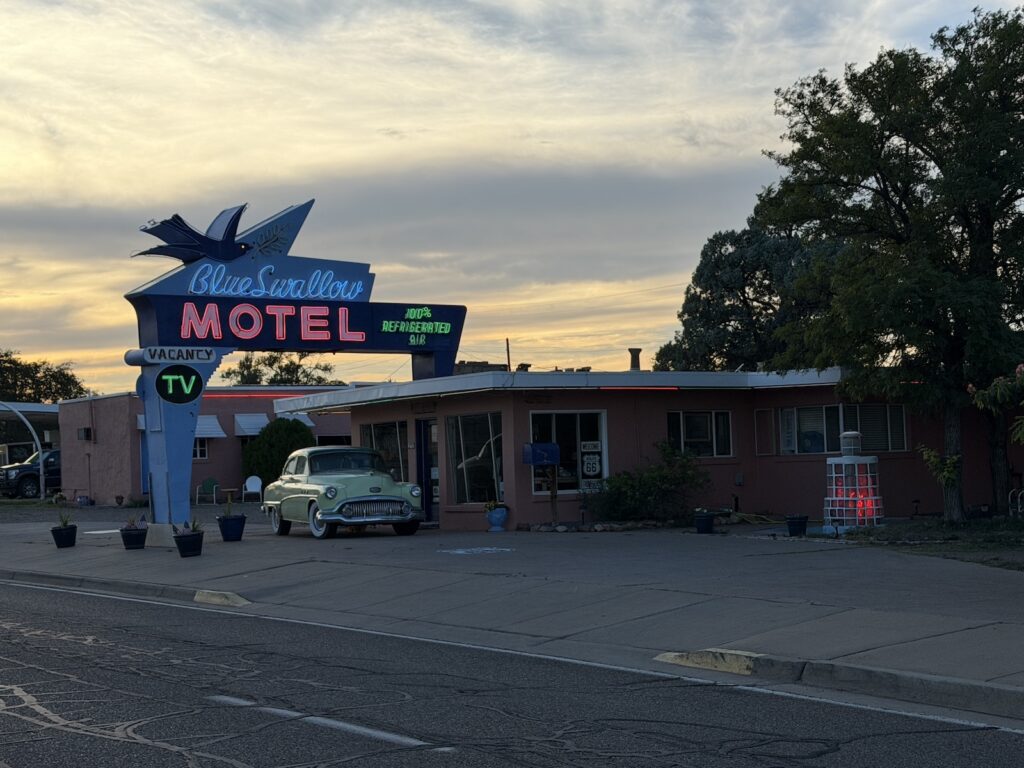
The centennial passes almost unnoticed through most towns and even entire states, except in Oklahoma, where Clinton, Weatherford and El Reno turned out genuinely decorated and ready for photographs. Elsewhere, the old road tells a quieter story: since Interstate 40 opened in the mid-1980s and absorbed through traffic, motels like the once-famous Wigwam in Holbrook have faded into little more than photo stops, remnants of the postwar decades when thousands of cars a day passed through towns like Kingman. John Steinbeck’s Grapes of Wrath captured an earlier, harder version of this same road, the one Dust Bowl families used out of necessity rather than nostalgia.
Cities as Supporting Cast
Albuquerque offered the most theatrical stretch, where the historic route has followed Central Avenue for nearly 18 miles since 1937, running through Old Town, Nob Hill and the Barelas district before the road opened back out into empty country. Oklahoma City, by contrast, felt like a different production entirely, modern, clean and urban after days of small towns, while Tulsa, once self-styled the oil capital of the world, offered its own landmarks before the landscape flattened out toward St Louis. Near Miami, Oklahoma, the Scout II found one more unpaved stretch, now signed as S 540 Road, and filled another page a postcard would never have bothered with.
Verdict: Worth Reading, Not Just Framing
A modern rental would have made the 2,500 miles easier and forgettable in roughly equal measure, the postcard version of this trip. The Scout II made them harder, thirstier and considerably more memorable, breaking down once near St Louis and getting patched back together with tape and improvised parts that needed reworking twice more before Chicago. That friction between myth and mechanics is exactly what a centennial road trip should record, and this battered notebook got every page of it down.