





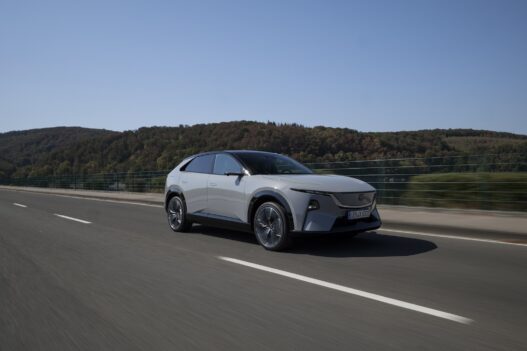
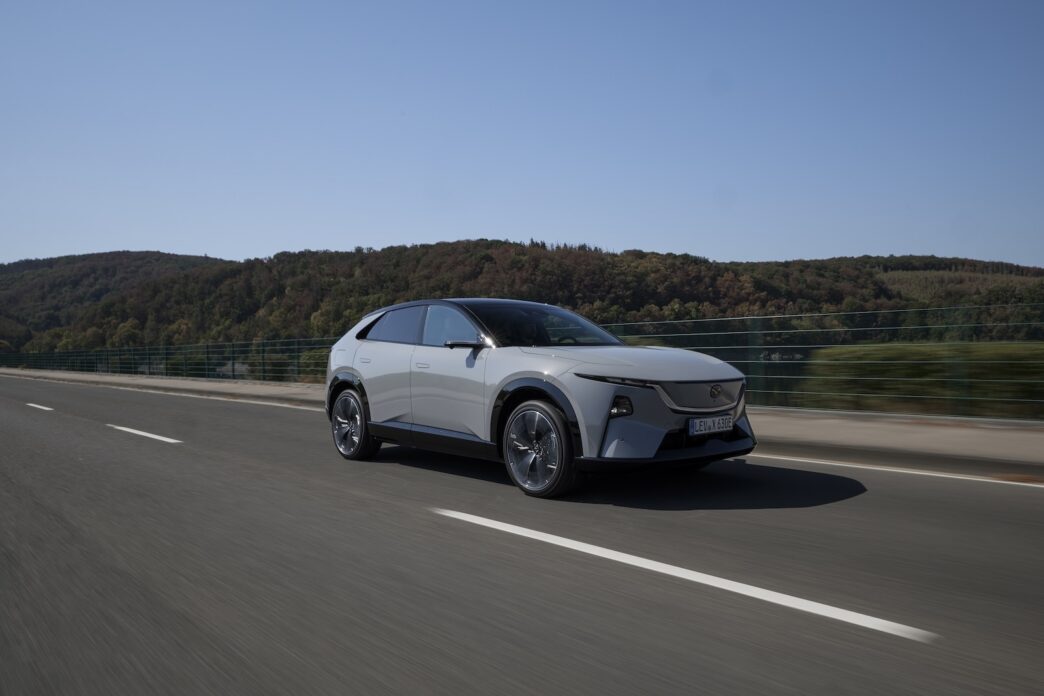
A name association, before anything else: Mazda has spent decades selling „Jinba Ittai“, horse and rider as one, its shorthand for feel and connection behind the wheel. The CX-6e carries the badge but was co-developed with Chinese manufacturer Changan, and it drives, and feels, less like a Mazda and more like a well-briefed diplomat representing two head offices at once.
A Joint Venture, Inside and Out
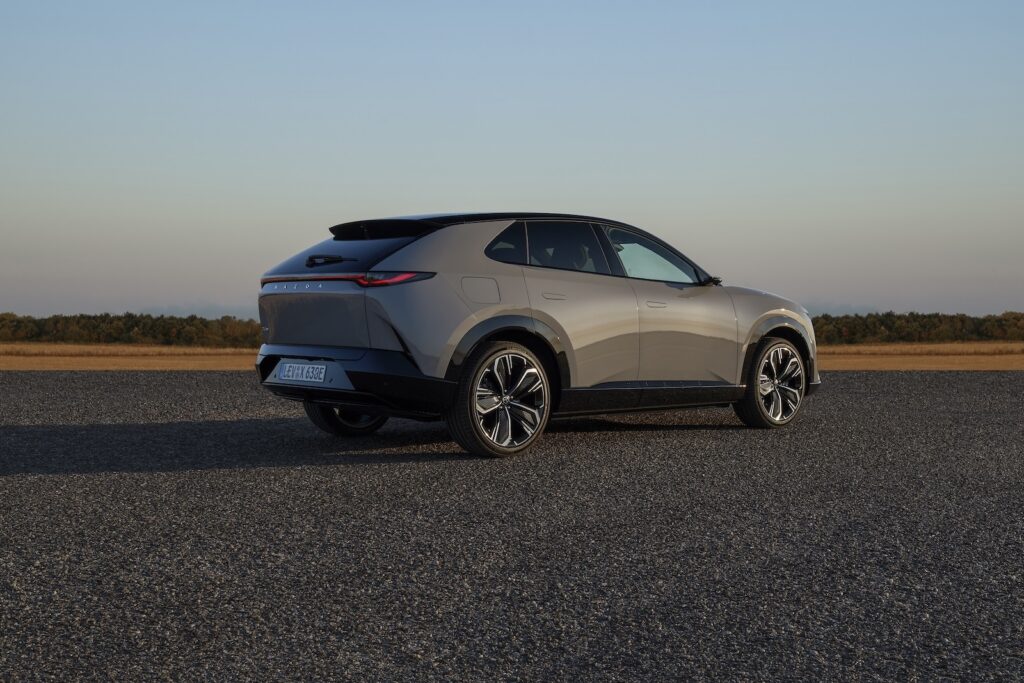
The CX-6e is Mazda’s second model built with Changan, following the 6e saloon. In China, the closely related car is sold as the Deepal S07, with slightly different styling and, unlike the European car, an optional 1.5-litre petrol range extender alongside the pure electric version. The project was originally aimed primarily at the Chinese market; only as European demand for electric vehicles grew did Mazda adapt and import it. That origin story shows most clearly inside the 4.85-metre cabin, which looks and feels distinctly un-Mazda in layout, ergonomics and detail, despite doing without leather upholstery.
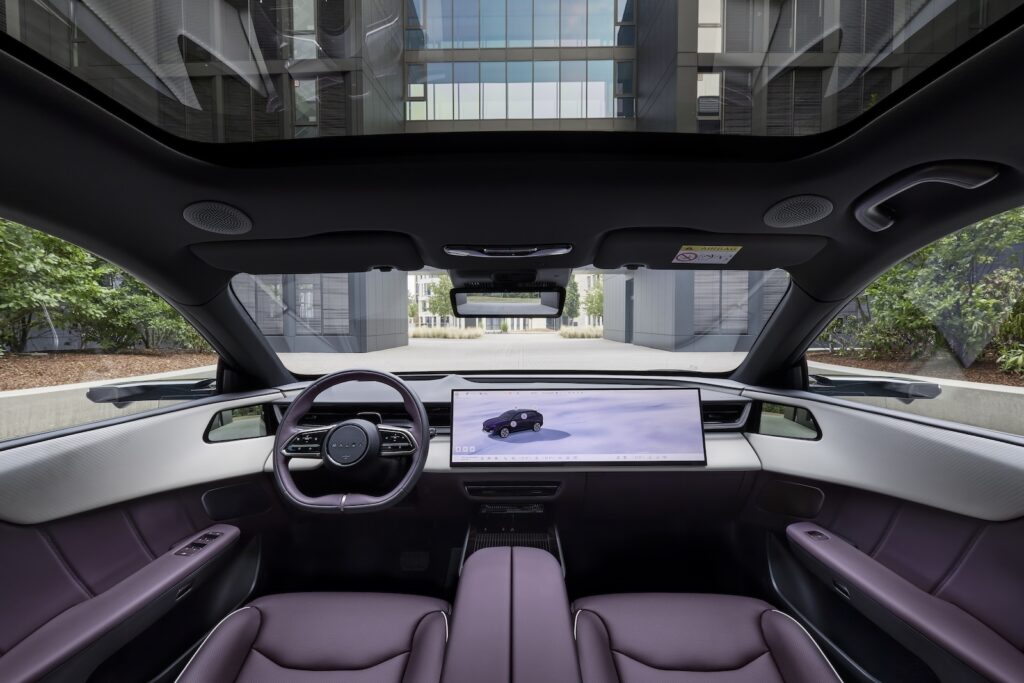
Inside: No Dials, No Switches, One Very Large Screen
Following Tesla’s playbook, the CX-6e has no instrument cluster at all, and no physical switches or dials for climate control, driver assistance or the sound system. Nearly everything routes through a 26-inch touchscreen that stretches well into the passenger’s side, with a large head-up display that only partly compensates for the missing dials. It’s a genuinely divisive setup. On the plus side, a panoramic roof with an electric blind adds more warmth than the switchable glass panels many rivals use, and a 23-speaker sound system delivers a properly rich result.
On the Road: Modest Power, Quiet Manners
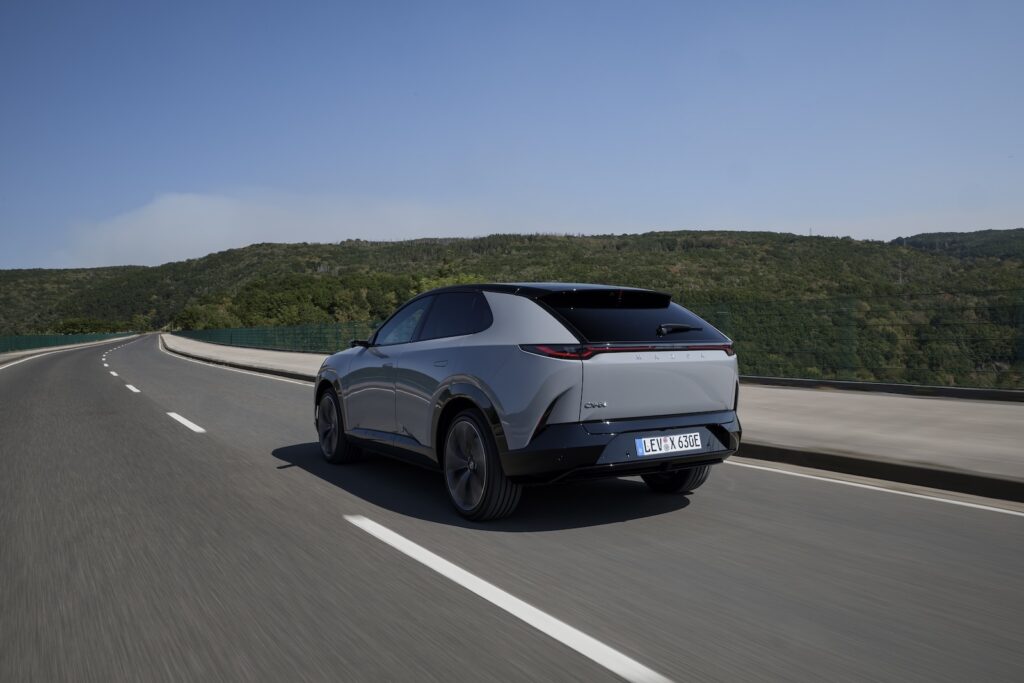
Mazda offers no choice of drivetrain: a single 190 kW (258 PS) motor drives the rear wheels, with no all-wheel-drive option, unusual in a segment where rivals typically offer over 350 PS and optional four-wheel drive as standard. Combined with a kerb weight over 2.2 tonnes and modest 290 Nm of torque, acceleration is unhurried — 0 to 100 km/h takes 7.9 seconds, and the car is electronically limited to 185 km/h. What does feel genuinely Mazda-like is the quietness at speed and a direct, well-weighted steering feel. Suspension tuning is largely sound, though the optional 21-inch wheels make the front axle noticeably fidgety on rough surfaces, and none of the drive modes offer adjustable damping.
Battery and Charging: Smaller Pack, Shorter Range
The 78 kWh lithium iron phosphate battery trails rivals, who typically offer 90 to 110 kWh, and its near-200 kW peak charging rate falls well short of competitors reaching over 350 kW. The upside is a 10-to-80-percent charge in a reasonable 24 minutes. WLTP range of 468 kilometres is the car’s weakest figure against a field that mostly clears 600 kilometres.
Verdict: Generously Equipped, Modestly Powered
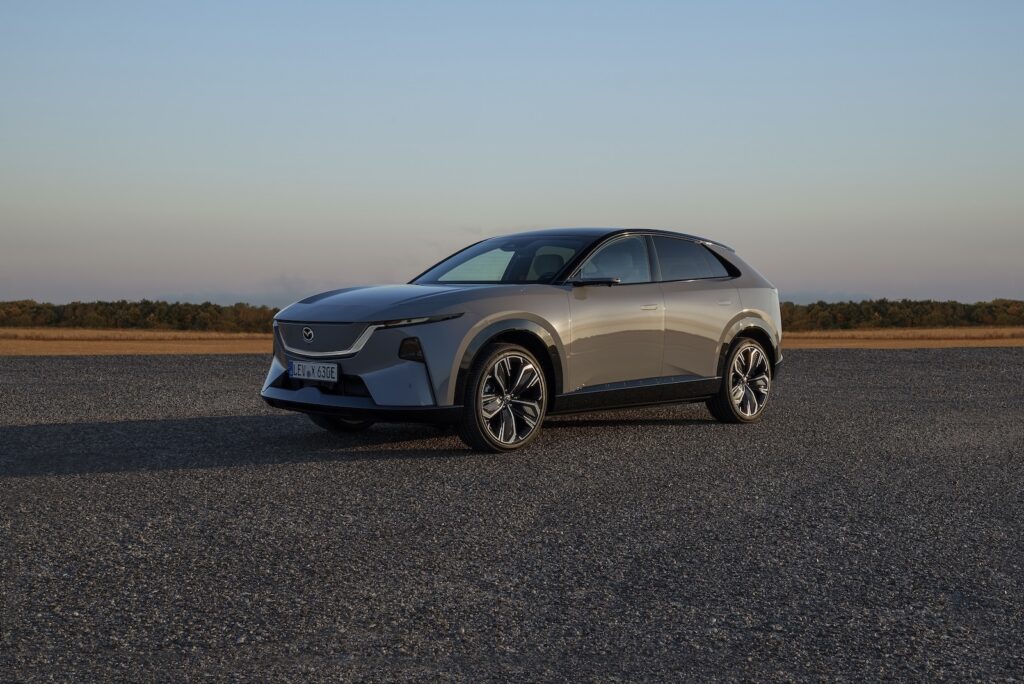
Strengths: sharp design, comprehensive standard equipment, quiet and composed at speed, a genuinely competitive €49,900 starting price, and 1,500 kg of towing capacity despite the lack of all-wheel drive. Weaknesses: no drivetrain choice, unremarkable acceleration, a smaller battery and shorter range than rivals, slower charging, and a touchscreen-only cabin that won’t suit everyone. The diplomat metaphor holds to the end: this is a car fluent in two markets‘ expectations, excelling at neither quite as convincingly as a native would.