





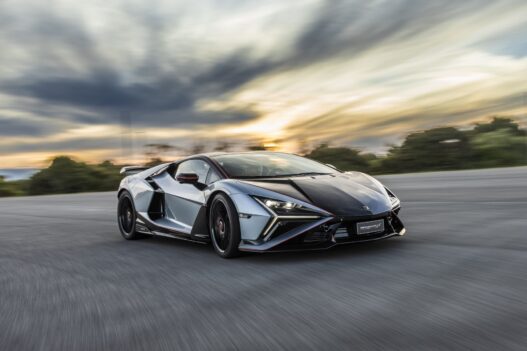
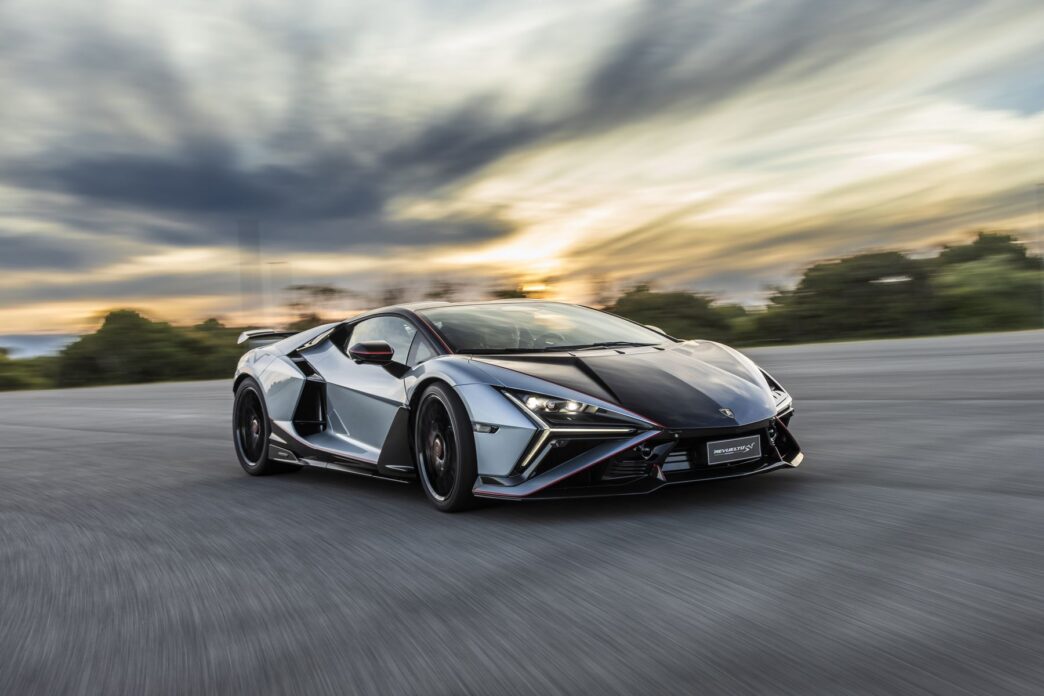
Some cars flatter you the moment you sit down. The Revuelto SV asks for commitment first, and rewards it generously once given. This is the story of what that commitment actually involves, and whether it is worth making.
A V12 That Refused to Change
The 6.5-litre naturally aspirated V12 at the heart of the Revuelto SV is untouched: 607 kW or 825 PS, exactly as in the standard car. The extra output comes entirely from the electrical side. Three electric motors, two at the front axle for all-wheel drive and torque vectoring, one mounted above the eight-speed dual-clutch gearbox, lift total system output to 783 kW or 1,065 PS, with 1,425 Nm of combined torque. A new battery, now 7.3 kWh rather than 3.8, switches from pouch cells to cylindrical ones within the same physical space, and can discharge up to 190 kW or 258 PS. Lamborghini says this keeps power delivery roughly four times steadier under sustained track use than in the regular car.
A Chassis You Set With Your Own Hands
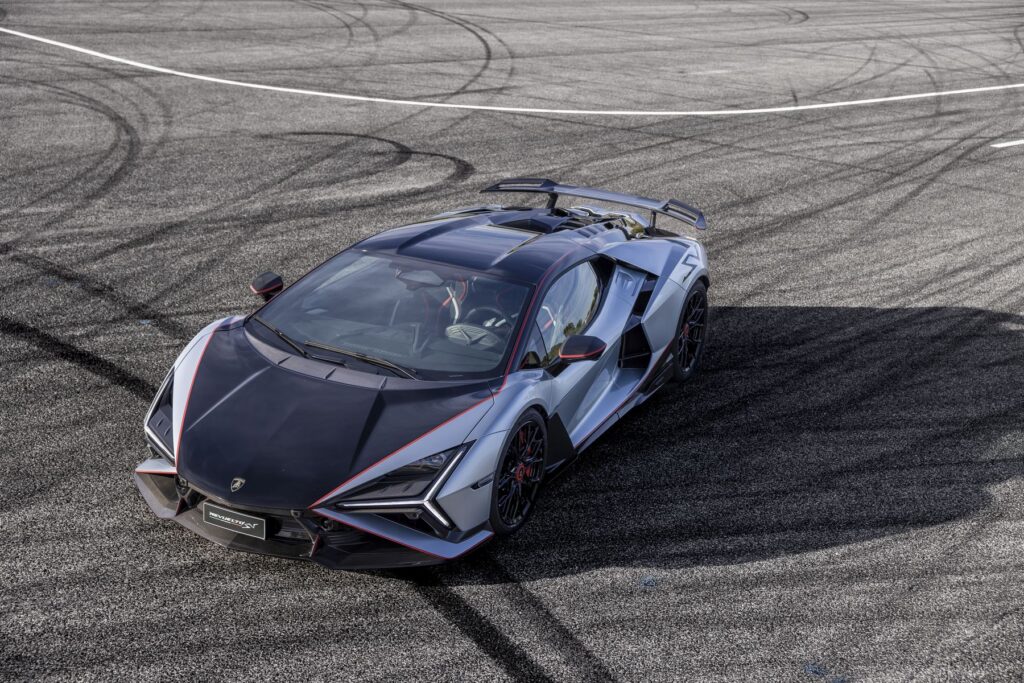
Where the standard Revuelto uses electronically adjustable dampers, the SV swaps them for passive units, each adjustable through 14 click positions for rebound and compression separately, an approach borrowed in spirit from GT3 racing. Lamborghini even supplies a printed sheet of baseline settings for different track surfaces, so nobody gets lost. On a deliberately bumpy test circuit, a softer setup was chosen for maximum traction, and the reward was clear from the first corners: the front axle turns in with noticeably more willingness than its sibling’s, aided by bespoke Bridgestone Potenza Race R semi-slick tyres that grip the tarmac tenaciously.
Senses Sharper Than the Driver’s
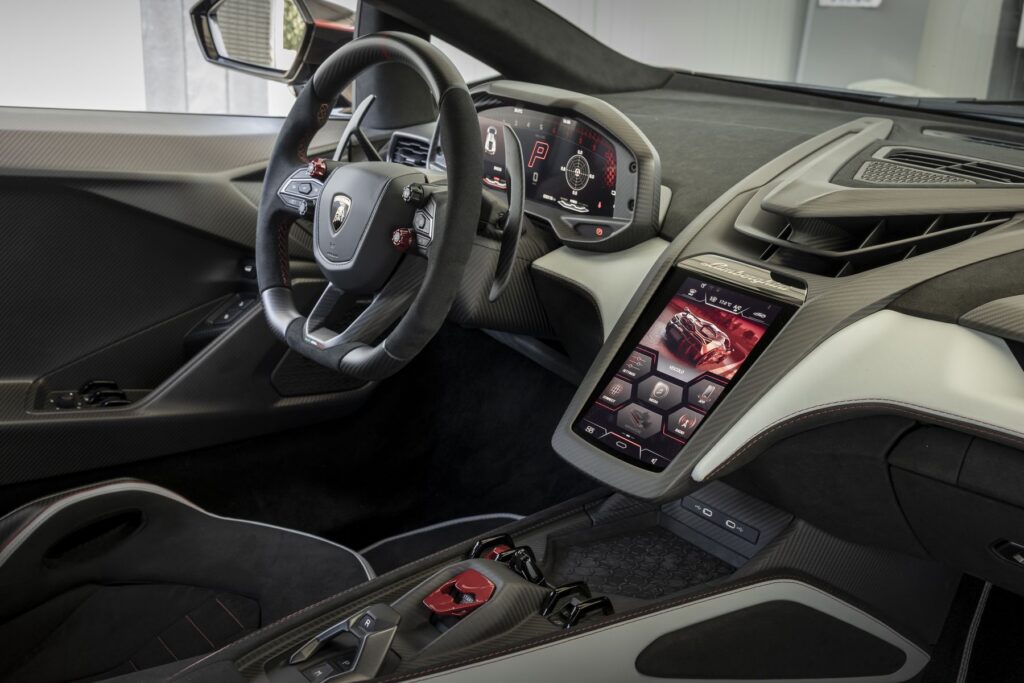
Underneath that hands-on chassis sits something considerably less analogue: a six-axis sensor, shared with the Urus SE Performante, mounted near the car’s centre of gravity, feeding an Integrated Vehicle Estimator that uses a Kalman filter to calculate speed, slip angle and available grip in real time. The payoff arrives at the brakes, which Lamborghini says can stop up to 10 per cent shorter as a result, helped by new CCM-R Plus discs that haul the car down from 200 km/h in 110 metres. Braking hard from beyond 230 km/h into a left-hand kink produced no drama at all, the car staying composed and the pedal fully controllable throughout.
Weight Held in Check
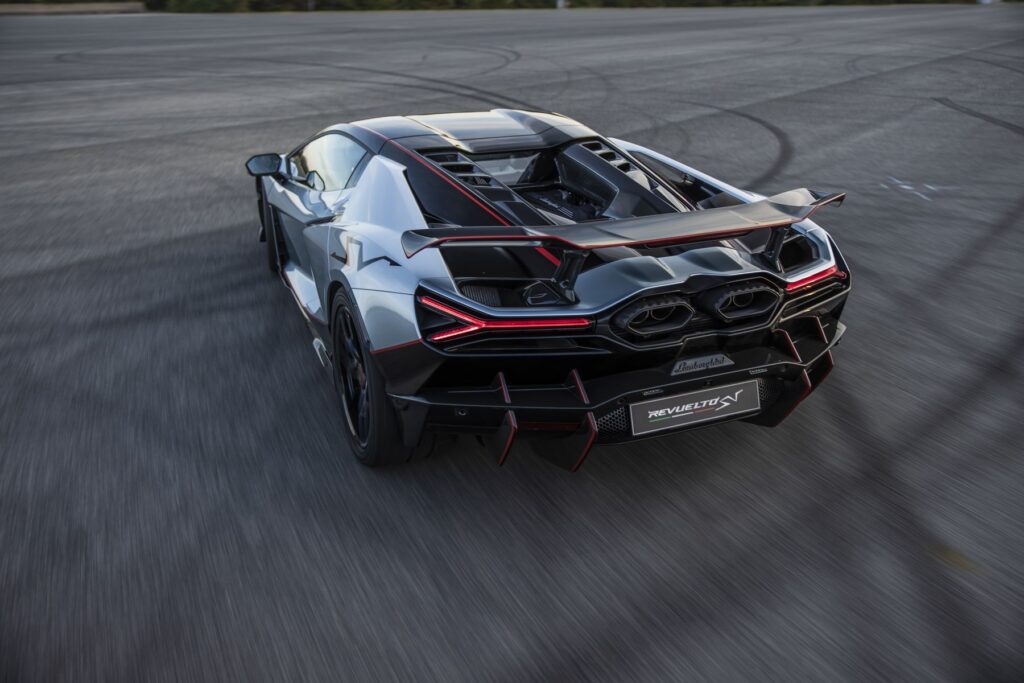
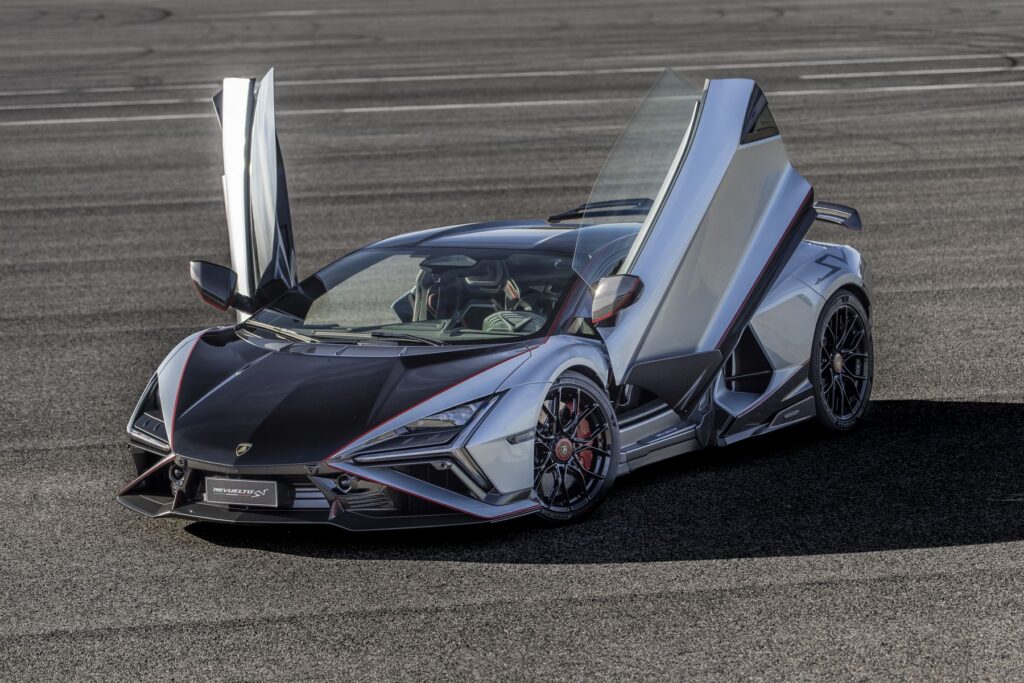
A larger battery, bigger brakes and more aerodynamic hardware would normally add mass, yet the SV keeps an identical dry weight to the standard car, 1,772 kg, thanks to carbon door panels, lightweight racing seats and lighter wheels that also reduce unsprung mass. A fixed rear wing, new front splitter, revised underbody and extra cooling ducts bring 80 per cent more downforce than the regular Revuelto, a 60 per cent better downforce-to-drag ratio, and brake cooling improved by 12 per cent.
Verdict: Generous, But It Wants Something in Return
Strengths: a V12 that still sounds properly mechanical rather than electrically enhanced, a chassis that rewards a driver willing to learn its 14-click settings, brakes and sensors that inspire real confidence at speed, and no weight penalty for all the extra hardware. The one demand it makes is effort: this is not a car that adjusts itself for you. Like any relationship worth having, the Revuelto SV gives a great deal, but only once you have put something in first.